
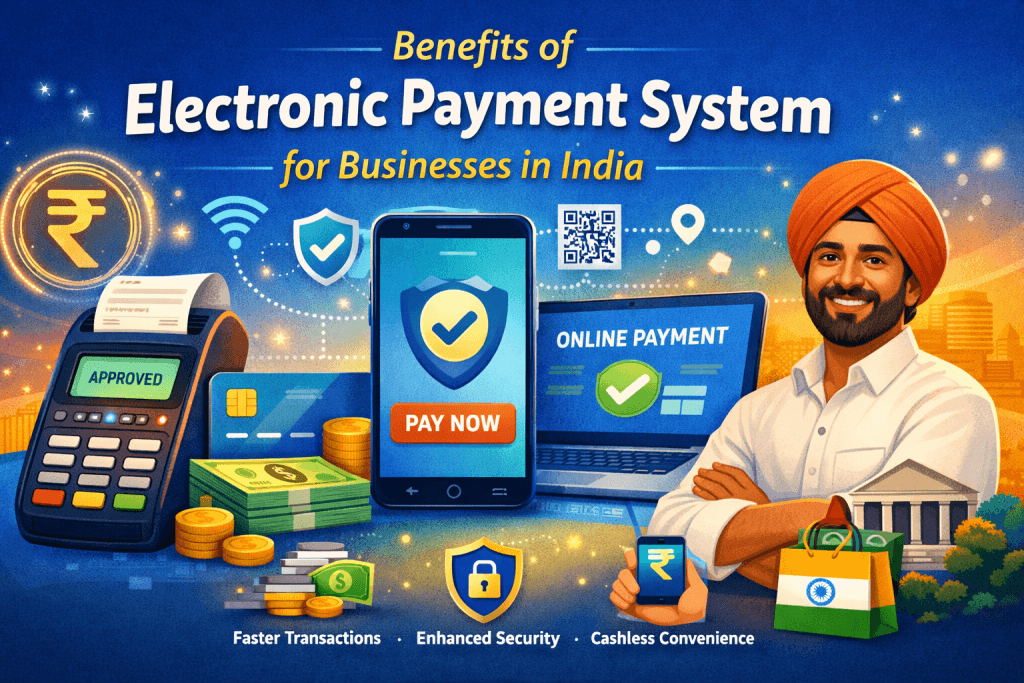
Digital payments have transformed how businesses handle transactions. From retail chains and mobile dealers to enterprise merchants and SMBs, companies are increasingly adopting electronic payment solutions to streamline operations and improve customer experience. Understanding the benefits of electronic payment system is essential for businesses that want to stay competitive in India’s rapidly evolving digital economy.
Electronic payment systems allow businesses to accept transactions through cards, UPI, wallets, and online banking without relying on physical cash. This not only simplifies payment processes but also improves efficiency, transparency, and security.
As a leading digital payment platform, Innoviti helps merchants across India modernize payment infrastructure and provide seamless transaction experiences for customers.
In this guide, we explore the key benefits of electronic payment system and how businesses can leverage these technologies to scale operations and increase revenue.
An electronic payment system is a digital infrastructure that allows businesses and consumers to transfer money electronically without using physical cash. These systems enable transactions through methods such as UPI, credit cards, debit cards, digital wallets, and online banking.
Electronic payment systems form the backbone of modern commerce by enabling secure and efficient transactions across both online and offline channels.
Businesses today rely on integrated merchant payment platforms to process digital payments seamlessly. Many merchants also use modern POS payment solutions to handle in-store electronic transactions.
Electronic payment systems help businesses simplify payment processing while providing customers with fast and convenient payment options.
Understanding the benefits of electronic payment system is important for companies aiming to improve operational efficiency and customer satisfaction.
Digital transactions have become the preferred payment method for millions of consumers in India. With the growth of UPI and mobile payments, customers expect businesses to support multiple payment options.
Electronic payment systems enable merchants to:
Businesses adopting digital payment systems also benefit from higher transaction success rates. Merchants can explore strategies to optimize payment performance through resources such as transaction success rate optimization insights.
Electronic payment systems include several advanced features that help businesses manage transactions efficiently.
Electronic payment systems support multiple payment options such as:
This flexibility improves customer convenience.
Security is a critical component of electronic payment systems. Modern platforms implement encryption, tokenization, and fraud prevention systems.
Businesses can learn more about protecting transactions through guides like payment fraud risks and prevention.
Digital payment systems allow transactions to be processed instantly, reducing waiting times for customers and merchants.
Many payment platforms provide dashboards that allow businesses to analyze transaction data and monitor payment trends.
The benefits of electronic payment system extend far beyond simple transaction processing. They contribute directly to business growth, efficiency, and customer satisfaction.
Electronic payments allow businesses to process transactions instantly, reducing delays compared to cash or manual bank transfers.
Customers prefer flexible payment options. Electronic systems allow them to pay using cards, UPI, or digital wallets.
Businesses offering multiple payment methods often see higher conversion rates and improved sales performance.
Companies can also boost sales by adopting robust payment options for online businesses.
Electronic payments reduce the need for manual cash handling and physical reconciliation.
Digital payment systems automatically record transactions, improving financial transparency and simplifying accounting processes.
Electronic payments reduce risks associated with cash theft and manual transaction errors.
Businesses expanding across multiple locations can manage payment infrastructure more efficiently using electronic payment platforms.
To understand the benefits of electronic payment system, it is useful to see how these systems process transactions.
The customer selects a payment method such as UPI, credit card, or wallet.
The payment system sends a transaction request to the relevant payment network or issuing bank.
The issuing bank verifies the transaction and confirms whether the payment can be approved.
Once approved, the payment system notifies both the customer and the merchant.
Funds are transferred to the merchant’s bank account through the payment settlement process.
Businesses implementing modern payment infrastructure often rely on payment gateway integration processes.
The benefits of electronic payment system become clearer when applied to real business scenarios.
Retail stores use electronic payment systems to process high volumes of daily transactions efficiently.
Large enterprises rely on integrated payment platforms to manage transactions across multiple channels.
Small businesses benefit from quick payment processing and simplified financial tracking.
Mobile phone retailers often combine electronic payments with financing options such as EMI payments.
Businesses can also use payment links for businesses to collect payments remotely through messaging platforms.
Businesses that do not adopt digital payments may face several operational challenges.
Customers expect businesses to support modern payment methods like UPI and card payments.
Handling physical cash increases operational complexity and security risks.
Manual payment methods can slow down checkout processes.
Businesses without digital payment capabilities may lose customers who prefer cashless transactions.
These challenges highlight the importance of adopting modern cashless payment systems.
Innoviti provides advanced fintech solutions that enable businesses to fully leverage the benefits of electronic payment system.
Innoviti’s payment technology platform helps merchants accept digital payments seamlessly across online and offline channels.
Solutions such as Innoviti Unipay and Innoviti Genie provide integrated tools for payment processing, analytics, and merchant management.
Innoviti has also received regulatory approval from the Reserve Bank of India as a payment aggregator, reinforcing its credibility in India’s digital payment ecosystem. Businesses can learn more about this milestone in this RBI authorization announcement.
By providing reliable and scalable payment infrastructure, Innoviti enables merchants to streamline payment operations and improve transaction efficiency.
India’s digital payment ecosystem is growing rapidly due to fintech innovation and increasing smartphone adoption.
UPI has become one of the most widely used digital payment methods, enabling instant bank-to-bank transactions.
Fintech companies are integrating artificial intelligence to improve payment routing, fraud detection, and transaction analytics.
Innoviti recently introduced AI-powered payment technology that enhances transaction efficiency and merchant performance.
Modern payment systems now include automation tools for:
These technologies are helping businesses manage payments more efficiently.
The benefits of electronic payment system refer to the advantages businesses gain from using digital payment technologies to process transactions electronically instead of using physical cash.
Key benefits include:
The benefits of electronic payment system include faster transactions, improved security, and better financial tracking. Businesses can also offer customers multiple payment options, which improves convenience and sales conversion.
Electronic payment systems help businesses streamline transaction processing and reduce reliance on cash handling. They also improve customer experience by enabling quick and secure digital payments.
Yes, modern electronic payment systems use encryption, tokenization, and fraud detection technologies to protect transactions. These systems significantly reduce risks associated with manual cash handling.
Common electronic payment methods include UPI, credit cards, debit cards, digital wallets, and net banking. These options allow customers to pay using their preferred payment method.
Electronic payment systems automate transaction processing and financial tracking. This reduces administrative workload and allows businesses to focus on growth.
Innoviti provides advanced fintech solutions that enable merchants to accept digital payments across multiple channels. Its payment infrastructure helps businesses improve transaction reliability and efficiency.
The benefits of electronic payment system are transforming how businesses manage transactions in the modern digital economy. By enabling fast, secure, and convenient payment processing, electronic payment systems help merchants improve operational efficiency, enhance customer experience, and increase sales opportunities.
For retail chains, enterprise merchants, SMBs, and mobile dealers, adopting digital payment infrastructure is no longer optional—it is essential for staying competitive in India’s rapidly evolving payment ecosystem.
As digital payments continue to grow through innovations like UPI, AI-driven payment technology, and automated merchant tools, businesses must invest in scalable payment platforms to support future growth.