
Disadvantages of No Cost EMI: What Businesses and Merchants Should Know
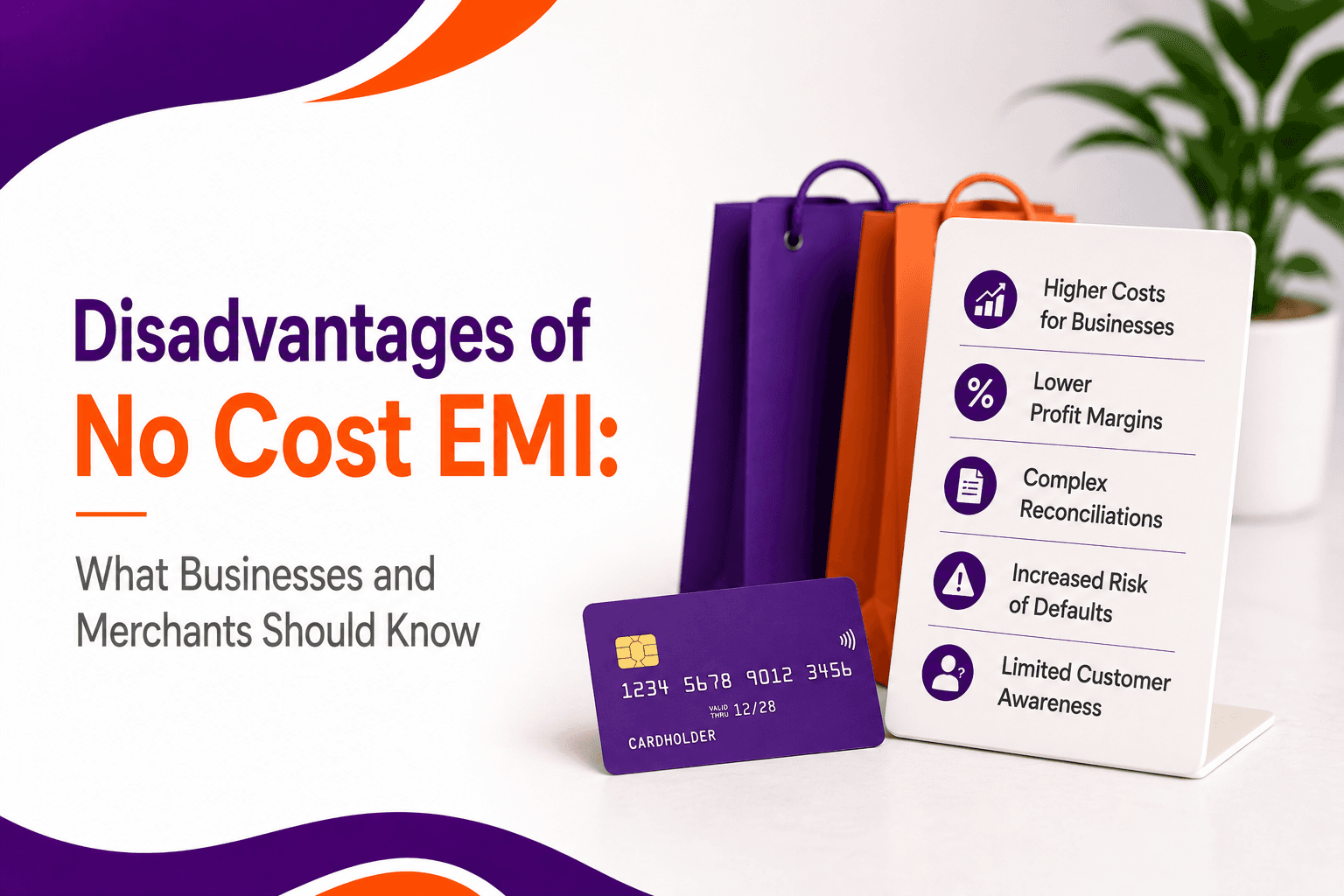
The popularity of EMI-based payment options has increased significantly in recent years. Retailers, mobile dealers, and e-commerce businesses frequently offer No Cost EMI schemes to attract customers and boost sales. While these schemes appear attractive at first glance, understanding the disadvantages of no cost EMI is important for both consumers and merchants.
No Cost EMI allows customers to split payments into installments without visible interest charges. However, behind the scenes, the cost of financing is often absorbed by merchants or hidden within pricing structures.
For businesses operating in India’s rapidly growing digital commerce ecosystem, it is important to evaluate the financial and operational implications of these schemes.
Fintech innovators like Innoviti help merchants manage EMI-based payment solutions through advanced digital payment infrastructure that balances customer convenience with business efficiency.
Table of Contents
- What Are the Disadvantages of No Cost EMI
- Why No Cost EMI Matters for Modern Businesses
- Key Features of No Cost EMI Payment Schemes
- Major Disadvantages of No Cost EMI
- How No Cost EMI Works in Digital Payments
- Real Business Use Cases of EMI Payment Options
- Challenges Businesses Face with No Cost EMI
- How Innoviti Helps Businesses Manage EMI Payments
- The Future of Digital Payments in India
- Featured Snippet: Disadvantages of No Cost EMI Explained
- FAQs About No Cost EMI
- Conclusion
What Are the Disadvantages of No Cost EMI
The disadvantages of no cost EMI refer to the financial and operational limitations associated with EMI financing schemes where customers appear to pay zero interest on installment payments.
In reality, the interest component is typically covered by the merchant, the bank, or included in product pricing. This can create hidden costs or financial implications for businesses offering such schemes.
For example:
- Merchants may absorb the financing cost.
- Product prices may increase to offset EMI discounts.
- Processing fees may apply to transactions.
Businesses offering digital payment solutions must understand how these schemes affect profit margins and transaction costs.
Retailers exploring EMI payment models often rely on merchant payment platform solutions to manage payment options efficiently.
Why No Cost EMI Matters for Modern Businesses
Understanding the disadvantages of no cost EMI is essential for businesses offering installment-based payment options.
No Cost EMI schemes are widely used in industries such as:
- electronics retail
- smartphone sales
- appliances
- furniture
- e-commerce
These schemes increase purchase affordability for customers and can boost average order values.
However, merchants must also evaluate the financial implications.
Businesses that rely on digital payment infrastructure should carefully balance sales growth with operational costs.
Merchants can explore broader digital payment strategies through resources such as e-payment systems explained for merchants.
Key Features of No Cost EMI Payment Schemes
Before examining the disadvantages of no cost EMI, it is important to understand how these payment models function.
Interest Subsidization
In most cases, the interest cost is absorbed by the merchant or brand instead of the customer.
Installment-Based Payments
Customers repay the product cost in equal monthly installments through credit cards or financing providers.
Instant Financing
Customers receive instant approval during checkout through digital payment platforms.
Integration with POS Systems
Retailers frequently enable EMI options through advanced POS payment solutions that integrate installment financing with checkout systems.
Major Disadvantages of No Cost EMI
While these schemes attract customers, there are several disadvantages of no cost EMI that businesses should understand.
Reduced Profit Margins
In many cases, merchants subsidize the interest component of EMI transactions. This can reduce profit margins on products.
Hidden Processing Costs
Banks or payment providers may charge processing fees or merchant discount rates.
Price Inflation
To compensate for EMI subsidies, some businesses increase product prices, which may reduce competitiveness.
Increased Financial Risk
Installment-based financing can increase financial exposure for merchants, particularly when working with multiple lending partners.
Customer Misunderstanding
Customers may assume the scheme is completely free of cost, which can lead to confusion about additional charges such as processing fees.
To avoid payment complications, merchants should understand transaction success rate optimization and payment reliability.
How No Cost EMI Works in Digital Payments
Understanding how EMI financing works helps businesses evaluate the disadvantages of no cost EMI more clearly.
Step 1 — Customer Selects EMI Option
During checkout, customers choose an EMI payment option instead of paying the full amount upfront.
Step 2 — Bank or Financing Partner Processes Transaction
The bank converts the purchase amount into monthly installments.
Step 3 — Merchant Receives Payment
The merchant usually receives the full payment upfront after the transaction is approved.
Step 4 — Customer Repays Bank
The customer pays the bank in monthly installments over the selected tenure.
Businesses implementing EMI financing must integrate payment systems correctly. Merchants can learn more from payment gateway integration guides.
Real Business Use Cases of EMI Payment Options
EMI financing models are widely used across industries despite the disadvantages of no cost EMI.
Retail Electronics
Retail stores selling televisions, laptops, and appliances often use EMI financing to increase affordability.
Smartphone Dealers
Mobile dealers rely heavily on EMI-based purchases to drive smartphone sales.
E-commerce Businesses
Online retailers frequently promote EMI offers during major sales events.
Businesses using digital channels can combine EMI offers with strategies discussed in online payment solutions for social commerce.
Challenges Businesses Face with No Cost EMI
Although EMI schemes can increase sales, the disadvantages of no cost EMI also create operational challenges for merchants.
Margin Pressure
Subsidizing interest costs reduces profitability.
Multiple Bank Partnerships
Merchants often need to partner with several banks to support EMI programs.
Transaction Complexity
Managing EMI transactions across payment platforms can increase operational complexity.
Fraud and Payment Risks
Installment financing may increase exposure to fraud risks.
Businesses must also understand payment fraud risks and prevention strategies to secure digital transactions.
How Innoviti Helps Businesses Manage EMI Payments
Innoviti provides advanced fintech infrastructure that enables businesses to offer EMI payment options while minimizing the disadvantages of no cost EMI.
Innoviti’s payment ecosystem enables merchants to manage digital payments, financing options, and transaction processing through integrated solutions.
For example, businesses can combine payment channels using payment links for businesses and POS systems to streamline payment collection.
Key Advantages of Innoviti Payment Technology
Unified Payment Platform
Merchants can manage multiple payment methods including cards, EMI options, and digital wallets.
Retail-Focused Payment Infrastructure
Innoviti solutions are designed specifically for retail chains, enterprise merchants, and SMB businesses.
Regulatory Compliance
Innoviti has received regulatory approval as a payment aggregator. Businesses can learn more in this RBI authorization announcement.
The Future of Digital Payments in India
India’s digital payments ecosystem is evolving rapidly with the growth of fintech innovation.
Expansion of UPI
UPI has become one of the most widely used payment systems globally, enabling instant bank transfers.
AI-Driven Payment Infrastructure
Fintech companies are integrating artificial intelligence into payment processing to improve security and transaction success rates.
Merchant Automation
Digital payment platforms now support automated systems for:
- payment reconciliation
- settlement management
- transaction analytics
Innoviti continues to innovate in payment technology to support merchants across India’s digital commerce ecosystem.
Featured Snippet Section
Disadvantages of no cost EMI refer to the financial and operational drawbacks of installment payment schemes where customers appear to pay zero interest, but the cost of financing is typically absorbed by merchants, banks, or product pricing structures.
Common disadvantages include:
- reduced merchant profit margins
- hidden processing fees
- increased product pricing
- complex payment processing
- potential customer confusion
FAQ Section
What are the disadvantages of no cost EMI?
The disadvantages of no cost EMI include reduced merchant margins, hidden processing fees, and price adjustments to compensate for interest subsidies. Businesses must carefully evaluate these financial impacts.
Is no cost EMI really free?
No cost EMI is not always completely free. The interest cost is usually absorbed by the merchant, bank, or brand, which may indirectly affect product pricing.
Why do businesses offer no cost EMI?
Businesses offer no cost EMI to increase sales by making expensive products more affordable. Installment payments encourage customers to make larger purchases.
Do merchants pay for no cost EMI?
In many cases, merchants share or absorb the interest subsidy required for no cost EMI programs. This can reduce profit margins on products.
Can EMI schemes increase business sales?
Yes, EMI payment options often increase conversion rates and average order values. However, businesses must balance these benefits with the financial costs involved.
How does Innoviti support EMI payment solutions?
Innoviti provides integrated payment technology that enables businesses to offer EMI financing while managing transaction processing efficiently.
Conclusion
While installment financing can increase sales and improve customer affordability, businesses must carefully consider the disadvantages of no cost EMI before implementing such schemes. Hidden costs, reduced profit margins, and operational complexities can affect long-term profitability if not managed properly.
Retailers, enterprise merchants, and mobile dealers should evaluate EMI payment programs as part of a broader digital payment strategy. By leveraging advanced payment infrastructure, businesses can offer flexible payment options while maintaining financial stability.
As India’s digital commerce ecosystem continues to grow, merchants must adopt payment technologies that support efficient, secure, and scalable transactions.
With its merchant-focused fintech solutions, Innoviti enables businesses to manage EMI payments, digital transactions, and payment infrastructure more effectively in the evolving digital economy.