
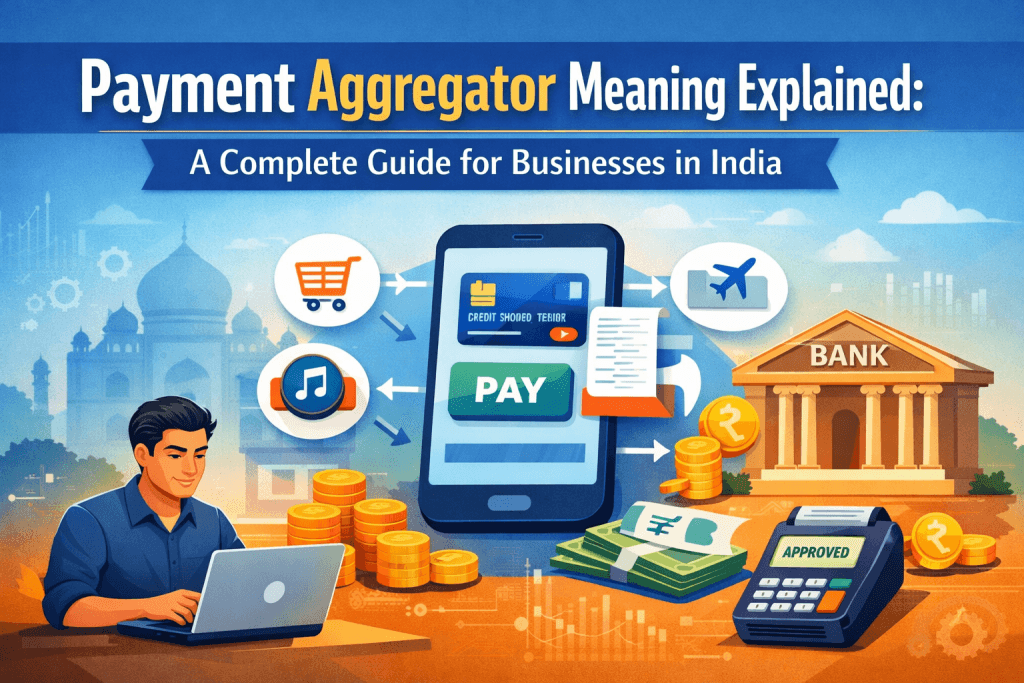
Digital payments have transformed how businesses in India accept and process transactions. From retail chains and enterprise merchants to mobile dealers and SMBs, modern commerce relies on seamless payment technology to support multiple payment methods.
Understanding the payment aggregator meaning is crucial for businesses looking to simplify digital payment acceptance. A payment aggregator enables merchants to accept credit cards, debit cards, UPI, wallets, and other digital payment options through a single platform, eliminating the need for multiple banking integrations.
As digital payments continue to grow, payment aggregators play a critical role in enabling efficient and secure transactions.
Companies like Innoviti are helping merchants modernize payment infrastructure by offering advanced digital payment platform solutions designed for retail businesses and enterprises across India.
What is Payment Aggregator
Why Payment Aggregator Matters for Modern Businesses
Key Features of Payment Aggregator
Benefits of Payment Aggregator for Businesses
How Payment Aggregator Works
Real-World Business Use Cases
Common Challenges Businesses Face
How Innoviti Helps Businesses Solve These Challenges
The Future of Digital Payments in India
Featured Snippet: Payment Aggregator Meaning Explained
FAQs About Payment Aggregators
Conclusion
The payment aggregator meaning refers to a fintech service that allows businesses to accept multiple digital payment methods through a single platform without needing separate merchant accounts with different banks.
A payment aggregator acts as an intermediary between merchants, customers, payment gateways, and banks. It processes payments, manages settlements, and ensures secure transaction routing.
Instead of integrating multiple payment systems individually, businesses can use a single merchant payment platform that consolidates all payment channels.
Payment aggregators typically support:
UPI payments
Credit and debit cards
Digital wallets
Net banking
POS transactions
Businesses using POS payment solutions can streamline their payment operations and improve customer checkout experiences. Retailers interested in learning more about POS systems can explore this guide on POS payment infrastructure.
Understanding the payment aggregator meaning is essential for businesses operating in a digital-first economy.
Customers today expect seamless payment experiences across multiple channels, including in-store, mobile, and online payments. Businesses that fail to provide flexible payment options risk losing sales opportunities.
Payment aggregators simplify payment acceptance by offering a unified payment infrastructure.
1. Unified Payment Acceptance
Businesses can accept various payment methods including:
UPI payments
debit cards
credit cards
digital wallets
This allows merchants to build efficient cashless payment systems that meet modern consumer expectations.
Businesses exploring digital payments can also read about the advantages of e-payment systems for merchants:
2. Faster Merchant Onboarding
Payment aggregators simplify onboarding so businesses can start accepting payments quickly.
3. Simplified Payment Infrastructure
Merchants no longer need to manage multiple banking integrations or payment processors.
A deeper understanding of the payment aggregator meaning requires exploring the core features of these platforms.
Payment aggregators allow merchants to accept payments through multiple channels including:
UPI
debit cards
credit cards
mobile wallets
net banking
Payment aggregators implement strong security protocols such as:
PCI-DSS compliance
data encryption
tokenization
These systems help protect merchants from payment fraud. Businesses concerned about digital transaction risks can learn more about payment fraud prevention strategies here:
Merchants gain visibility into transaction trends, payment success rates, and customer preferences.
Payment aggregators provide built-in payment reconciliation software that simplifies settlement tracking and accounting processes.
Understanding the payment aggregator meaning highlights several key advantages for businesses across industries.
Payment aggregators reduce the complexity of integrating multiple payment systems.
Offering multiple payment methods improves checkout convenience and customer satisfaction.
Businesses can manage all payment activities from a single merchant payment platform.
Retail chains expanding to multiple locations can scale payment operations quickly.
When customers find their preferred payment option, they are more likely to complete transactions.
Businesses that use payment links for businesses can also simplify remote payments and online transactions. Learn more about this in this article:
To understand the payment aggregator meaning, it’s helpful to examine how payment transactions are processed.
A customer chooses a payment option such as UPI or credit card.
The payment aggregator routes the request to the relevant bank or payment network.
The issuing bank verifies the transaction and approves or declines it.
The transaction result is communicated to both the merchant and the customer.
The payment aggregator transfers the collected funds to the merchant’s account after settlement cycles.
Innoviti offers advanced payment infrastructure through solutions like Innoviti Unipay that help retailers manage transactions efficiently across multiple payment channels.
The payment aggregator meaning becomes clearer when applied to real business scenarios.
Retail businesses process high volumes of transactions daily. Payment aggregators help them centralize payment processing and simplify reconciliation.
Solutions like Innoviti Genie help retailers automate store-level payment operations and analytics.
Large enterprises require scalable payment infrastructure that can support thousands of transactions across locations.
Mobile dealers often rely on EMI-based card payments and instant digital transactions.
Payment solutions like Innoviti Link enable merchants to accept payments through secure digital payment links.
Businesses that do not fully understand the payment aggregator meaning often encounter operational challenges.
Without payment aggregators, merchants must integrate with several payment processors individually.
Managing settlements from multiple payment providers can create accounting complexities.
Handling payment data without proper fintech infrastructure increases vulnerability to fraud.
Businesses that do not support multiple payment methods may lose customers to competitors offering flexible digital payment options.
Innoviti plays a key role in helping businesses implement efficient digital payment infrastructure.
Through its merchant payment platform, Innoviti enables retailers and enterprises to accept payments seamlessly across multiple channels.
Innoviti solutions provide:
integrated payment processing
secure transaction management
payment analytics
automated reconciliation
Innoviti has also received industry recognition for its SaaS-based fintech innovations, including awards for payment technology excellence. The company has been authorized by the Reserve Bank of India to support digital payment services across both online and offline environments. Businesses interested in partnership opportunities can explore Innoviti’s ecosystem.
India is one of the fastest-growing digital payments markets in the world.
Several trends are shaping the future of payment technology.
UPI has revolutionized peer-to-peer and merchant payments with instant bank transfers.
Consumers increasingly prefer contactless and mobile payments over cash.
Payment technology platforms are integrating automation tools that simplify reconciliation, fraud detection, and financial reporting.
Businesses interested in digital payment trends can explore insights on cashless payment systems and future digital payment tools.
As payment ecosystems evolve, payment aggregators will remain central to merchant payment infrastructure.
The payment aggregator meaning refers to a financial technology service that allows businesses to accept multiple digital payment methods through a single platform without establishing individual merchant accounts with different banks or payment processors.
Payment aggregators typically:
enable businesses to accept cards, UPI, and wallets
route payment transactions securely
handle payment authorization
manage settlement and reconciliation
simplify payment infrastructure for merchants
The payment aggregator meaning refers to a fintech service that allows merchants to accept multiple digital payment methods through a single platform. It simplifies payment processing by managing integrations with banks, payment networks, and gateways.
A payment aggregator collects payments from customers, processes them through payment networks, and settles the funds into the merchant’s bank account. This eliminates the need for merchants to integrate with multiple banks separately.
Businesses need payment aggregators to simplify digital payment acceptance. They help merchants offer multiple payment options, improve checkout experiences, and streamline payment operations.
A payment gateway processes payment transactions, while a payment aggregator provides a complete payment infrastructure that includes merchant onboarding, transaction processing, and settlement management.
Yes. Payment aggregators use encryption, tokenization, and regulatory compliance standards to ensure secure digital transactions and protect merchant and customer data.
Innoviti provides advanced payment technology that helps businesses accept and manage digital payments efficiently. Its solutions enable retailers and enterprises to streamline payment processing and improve transaction reliability.
Understanding the payment aggregator meaning is essential for businesses that want to succeed in India’s rapidly growing digital economy. Payment aggregators simplify complex payment infrastructure by allowing merchants to accept multiple payment methods through a unified platform.
For retail chains, enterprise merchants, mobile dealers, and SMB businesses, payment aggregators provide significant advantages including faster payment adoption, simplified integrations, improved customer experience, and scalable digital payment infrastructure.
As India continues to move toward a fully digital and cashless economy, payment technology will play a crucial role in enabling seamless transactions.
Through its innovative digital payment platform, Innoviti empowers businesses to modernize their payment systems, improve operational efficiency, and build scalable payment infrastructure for the future of commerce.