
Digital payments have become a critical part of modern commerce in India. From retail chains and enterprise merchants to SMBs and mobile dealers, businesses today rely on efficient payment infrastructure to accept customer payments seamlessly.
However, many businesses struggle to understand the difference between payment aggregator vs payment gateway. While both play an important role in digital payment processing, they serve different purposes within the payment ecosystem.
Choosing the right solution can directly impact transaction efficiency, customer experience, and payment security. Businesses that understand these technologies can streamline operations and improve payment acceptance across channels.
As a leading digital payment technology company, Innoviti helps merchants build scalable payment infrastructure through advanced solutions available on its digital payment platform, enabling businesses to accept secure and efficient digital payments.
Understanding payment aggregator vs payment gateway is essential for businesses adopting digital payments.
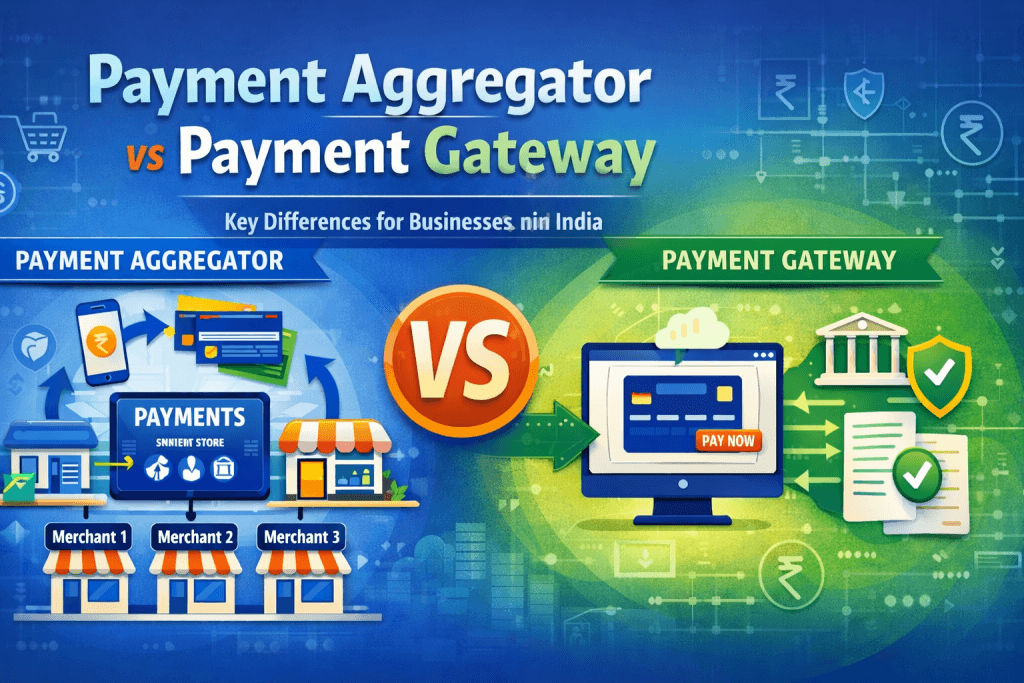
A payment gateway is a technology that securely transmits payment information from the customer to the bank for authorization. It acts as the bridge between the merchant’s payment system and the financial institution.
A payment aggregator, on the other hand, enables merchants to accept multiple payment methods without opening separate merchant accounts with banks. The aggregator processes transactions on behalf of multiple merchants and handles settlement.
For example:
Businesses using modern POS payment solutions often rely on both technologies working together to process transactions smoothly.
The comparison of payment aggregator vs payment gateway is important because businesses must choose the right payment infrastructure to support their operations.
Customers today prefer flexible payment options such as:
Businesses need payment systems that support all these methods.
Payment aggregators simplify merchant onboarding while gateways handle transaction authorization.
Retailers and enterprise merchants require reliable payment technology that can handle large transaction volumes securely.
As digital transactions increase, businesses must invest in scalable cashless payment systems that support modern payment methods.
To understand payment aggregator vs payment gateway, it is important to look at their distinct features.
Secure Transaction Processing
Payment gateways encrypt customer payment information and send it to banks for authorization.
Integration with Merchant Systems
Gateways integrate with websites, mobile apps, and POS terminals.
Real-Time Payment Authorization
Transactions are verified instantly with issuing banks.
Unified Payment Acceptance
Aggregators allow merchants to accept multiple payment methods using one integration.
Merchant Onboarding
Aggregators handle merchant registration and compliance processes.
Settlement Management
They collect payments and distribute funds to merchants after settlement cycles.
Solutions like Innoviti UniPay provide advanced in-store payment processing for retailers through the company’s POS payment solution platform.
Understanding the benefits of payment aggregator vs payment gateway helps merchants choose the right solution for their needs.
Businesses do not need to manage multiple payment service providers.
Payment aggregators allow businesses to start accepting payments quickly.
Payment gateways ensure encrypted transaction processing.
Businesses can accept payments across:
Platforms like Innoviti Genie enable merchants to automate payment operations using advanced merchant payment platform technology.
To understand payment aggregator vs payment gateway, we must examine how payment transactions flow through these systems.
A customer chooses a payment method at checkout.
The gateway encrypts payment details and sends them to the issuing bank.
The bank verifies the transaction and approves or declines it.
If a payment aggregator is involved, it processes the payment on behalf of the merchant.
Funds are transferred to the merchant’s bank account after processing.
Businesses using payment links for businesses can also process transactions remotely using similar infrastructure.
The concept of payment aggregator vs payment gateway becomes clearer when we look at practical applications.
Large retailers need reliable POS payment systems to process thousands of daily transactions.
Enterprises require payment technology capable of managing complex payment ecosystems across multiple locations.
Small businesses benefit from payment aggregators because they simplify digital payment acceptance.
Mobile stores often process EMI-based card payments and UPI transactions.
Businesses using e-payment systems can streamline payment acceptance and improve customer experience.
Without the right payment infrastructure, businesses may face challenges related to payment aggregator vs payment gateway selection.
Businesses may need multiple integrations for different payment methods.
Handling digital payments without proper safeguards can increase the risk of fraud.
Companies must implement systems designed to prevent payment fraud risks and protect customer data.
Manual reconciliation and payment tracking can slow down financial operations.
Businesses may struggle to support multiple payment options.
Innoviti provides advanced fintech solutions designed to simplify digital payment infrastructure.
Through its innovative technology stack, Innoviti enables businesses to handle both gateway and aggregation services effectively.
The company has received strong industry recognition, including RBI authorization for online and in-store payments.
Innoviti’s solutions include:
A retail-focused payment processing platform that simplifies in-store digital payments.
A payment management system that helps merchants automate payment reconciliation and analytics.
A solution that enables merchants to accept remote payments using payment links for businesses.
Innoviti continues to expand its payment ecosystem through partnerships with financial institutions, including its collaboration with RBL Bank.
Businesses can also explore partnership opportunities through the Innoviti merchant partner network.
India is one of the fastest-growing digital payment markets in the world.
Several trends are shaping the future of payments:
UPI has transformed the way consumers make payments by enabling instant bank-to-bank transfers.
Fintech companies are introducing advanced payment technologies such as AI-driven fraud detection and automated reconciliation.
Retailers are increasingly adopting digital tools to automate payment operations.
Businesses now prefer integrated platforms that combine POS, payment aggregation, and analytics.
Innoviti continues to lead fintech innovation and has been recognized for its SaaS-based payment technology excellence.
Payment aggregator vs payment gateway refers to the difference between two essential components of digital payment infrastructure. A payment gateway securely transmits payment data to banks for authorization, while a payment aggregator allows businesses to accept multiple payment methods without needing separate merchant accounts.
Key differences include:
The term payment aggregator vs payment gateway refers to the difference between two payment technologies. A gateway securely processes payment information, while a payment aggregator enables merchants to accept multiple payment methods through a single platform.
Both solutions serve different purposes. Payment gateways handle secure transaction processing, while payment aggregators simplify merchant onboarding and payment acceptance.
Payment aggregators collect payments from customers, process them through banking networks, and settle the funds to merchants after deducting applicable fees.
Yes. Many digital payment systems use both technologies together. Gateways process transactions, while aggregators manage merchants and settlements.
Yes. Payment aggregators implement strong security protocols including encryption, PCI compliance, and fraud prevention technologies.
Innoviti provides advanced payment infrastructure solutions that help merchants accept digital payments efficiently through POS systems, payment links, and automated payment management tools.
Understanding payment aggregator vs payment gateway is essential for businesses operating in today’s digital economy. While payment gateways enable secure transaction processing between merchants and banks, payment aggregators simplify payment acceptance by allowing businesses to accept multiple payment methods through a single platform.
For retailers, enterprise merchants, SMBs, and mobile dealers, selecting the right payment infrastructure can significantly improve operational efficiency, transaction security, and customer experience.
As India continues to lead the global shift toward digital payments—driven by UPI, fintech innovation, and increasing adoption of cashless transactions—businesses must invest in scalable payment technologies.
With its advanced payment solutions and merchant-focused innovation, Innoviti is helping businesses build reliable digital payment infrastructure and scale their operations in the evolving digital payments ecosystem.