
Payment Gateway API Documentation: A Complete Guide for Businesses and Developers
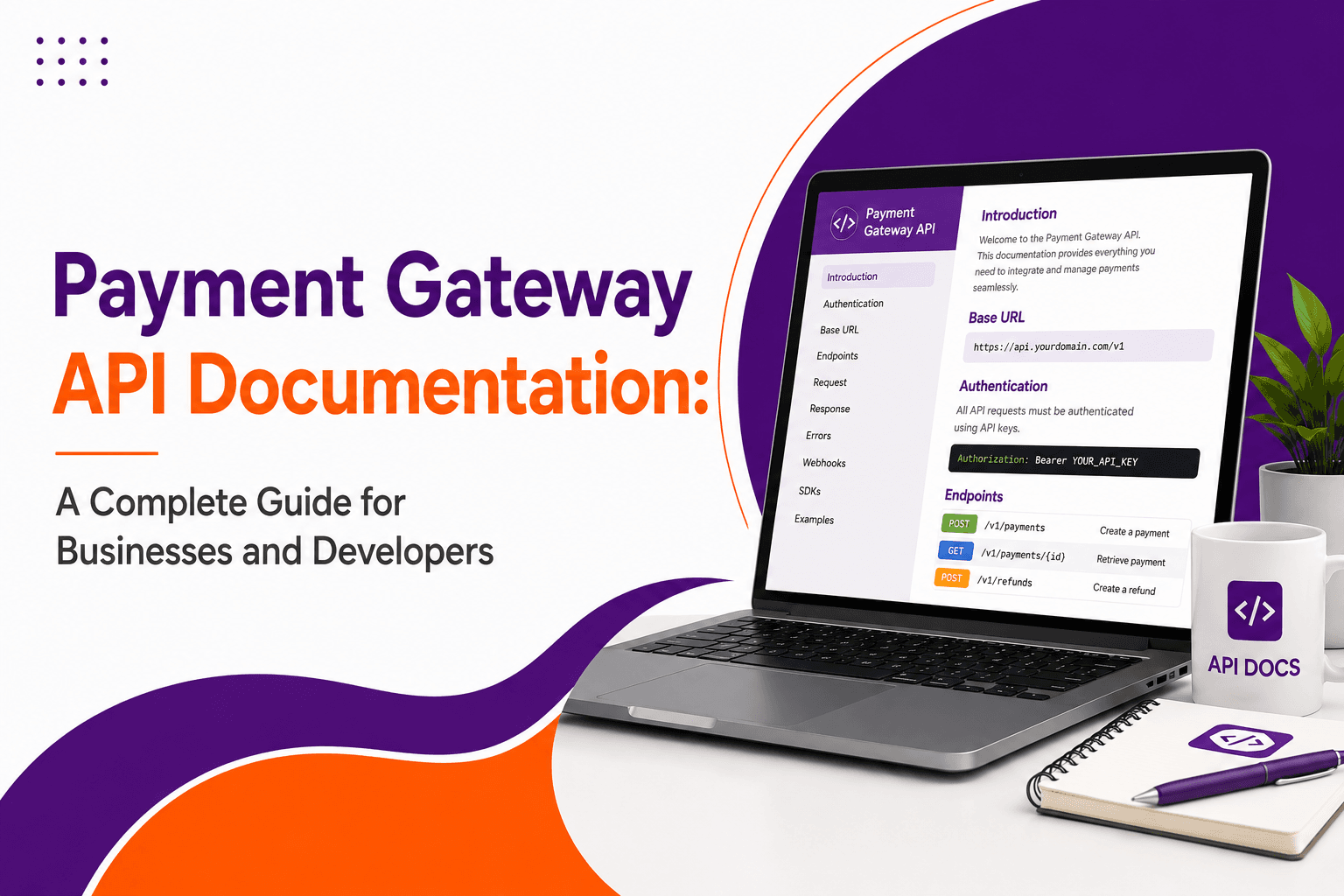
Payment gateway API documentation plays a critical role in helping businesses, developers, and technology teams successfully implement digital payment solutions. As India’s digital economy continues to grow through UPI Payments, card transactions, digital wallets, and online commerce, organizations increasingly depend on robust APIs to deliver secure and seamless payment experiences.
A well-structured payment gateway API documentation framework helps developers understand integration requirements, authentication methods, transaction workflows, error handling, security protocols, and settlement processes. Without comprehensive documentation, payment integrations can become complex, time-consuming, and prone to errors.
As businesses continue investing in modern Payment Infrastructure, access to reliable documentation has become a key factor in payment gateway selection. Innoviti contributes to India’s evolving digital payments ecosystem by supporting scalable payment technologies and enterprise-grade payment solutions.
Table of Contents
- What Is Payment Gateway API Documentation?
- Why Payment Gateway API Documentation Matters
- Key Components of Payment Gateway API Documentation
- How Developers Use Payment Gateway API Documentation
- Benefits of High-Quality Payment Gateway API Documentation
- Payment Gateway API Documentation for Different Business Models
- Security Requirements in Payment Gateway API Documentation
- Common Challenges and Best Practices
- Future of API-Driven Payment Systems
- Industry Insights
- Featured Snippet Section
- FAQ Section
- Conclusion
What Is Payment Gateway API Documentation?
Payment gateway API documentation is a structured technical resource that explains how developers can integrate a payment gateway into websites, mobile applications, software platforms, and digital commerce systems.
A comprehensive payment gateway API documentation typically includes:
- API endpoints
- Authentication methods
- Request and response formats
- Payment workflows
- Error codes
- Security requirements
- Testing environments
- Integration examples
The primary purpose of payment gateway API documentation is to simplify implementation while ensuring secure and reliable payment processing.
Why Payment Gateway API Documentation Matters
Modern businesses rely on APIs to enable digital commerce and automated payment experiences.
Without detailed payment gateway API documentation, developers may encounter:
- Integration delays
- Security risks
- Payment failures
- Increased development costs
Faster Deployment
Well-designed documentation accelerates integration timelines.
Reduced Development Complexity
Clear implementation guidance helps development teams avoid common mistakes.
Improved Transaction Reliability
Accurate API implementation improves payment success rates.
Better Customer Experience
Reliable integrations lead to smoother checkout experiences.
A strong payment gateway API documentation framework benefits both businesses and developers.
Key Components of Payment Gateway API Documentation
Several elements contribute to effective payment gateway API documentation.
Authentication Documentation
Developers need clear instructions on:
- API keys
- Access tokens
- Authorization workflows
- Security protocols
API Endpoint References
Every API call should include:
- Request structure
- Parameters
- Response formats
- Sample payloads
Payment Processing Workflows
A quality payment gateway API documentation should explain:
- Transaction initiation
- Authorization
- Settlement
- Refund processing
Error Handling
Documentation should include:
- Error codes
- Failure scenarios
- Recovery procedures
Testing Environments
Sandbox environments allow developers to validate integrations before deployment.
How Developers Use Payment Gateway API Documentation
Developers rely heavily on payment gateway API documentation throughout the implementation lifecycle.
Integration Planning
Teams review documentation to understand:
- Technical requirements
- Supported payment methods
- System compatibility
Development
Documentation guides implementation of:
- Payment requests
- Customer authentication
- Transaction processing
Testing
Developers use documentation to validate:
- Payment flows
- Error handling
- Security measures
Maintenance
Ongoing API updates often require documentation reviews.
Effective payment gateway API documentation reduces implementation complexity and improves operational efficiency.
Benefits of High-Quality Payment Gateway API Documentation
Businesses often underestimate the value of strong documentation.
Faster Integrations
Clear guidance reduces development time.
Lower Support Requirements
Developers can resolve issues independently.
Improved Security
Documentation helps teams implement secure payment workflows.
Better Scalability
Well-documented APIs support future enhancements and business growth.
Consistent Implementation
Standardized guidance ensures reliable payment experiences.
Organizations evaluating payment providers should carefully assess the quality of payment gateway API documentation.
Payment Gateway API Documentation for Different Business Models
Different organizations use APIs differently.
E-Commerce Businesses
Require:
- Checkout integration
- Payment status tracking
- Refund workflows
Mobile Applications
Need:
- In-app payments
- Token management
- Secure authentication
Enterprise Retailers
Require:
- Omnichannel payment capabilities
- Centralized reporting
- Advanced transaction workflows
Subscription Businesses
Need:
- Recurring billing
- Automated payment collection
- Payment lifecycle management
A flexible payment gateway API documentation framework should support multiple business models.
Security Requirements in Payment Gateway API Documentation
Security remains one of the most critical aspects of payment integration.
API Authentication
Documentation should clearly explain authentication mechanisms.
Encryption Standards
Sensitive payment data must be encrypted.
Tokenization
Tokenization helps reduce exposure of customer payment information.
Fraud Prevention
Modern payment systems support:
- Risk analysis
- Fraud monitoring
- Transaction validation
Regulatory Compliance
Businesses must comply with applicable standards and regulations.
A secure payment gateway API documentation framework helps reduce implementation risks.
Common Challenges and Best Practices
Incomplete Documentation
Missing information can delay implementation.
Poor Error Handling Guidance
Developers need detailed troubleshooting support.
Limited Testing Resources
Sandbox environments improve integration quality.
Version Management Issues
Documentation should clearly explain API updates and changes.
Best Practices
Organizations should:
- Follow documentation standards
- Use sandbox testing
- Implement security recommendations
- Monitor API performance
Adhering to best practices maximizes the effectiveness of payment gateway API documentation.
Future of API-Driven Payment Systems
The future of digital payments will continue to be driven by APIs.
AI-Powered Payments
Artificial intelligence is improving:
- Fraud detection
- Transaction routing
- Customer experiences
Embedded Finance
Financial services are increasingly integrated into digital ecosystems.
Real-Time Payments
Customers increasingly expect instant transactions.
Omnichannel Commerce
Businesses require unified payment experiences across channels.
Future-ready organizations will depend on robust payment gateway API documentation to support evolving payment technologies.
The Future of Digital Payments in India
India remains one of the world’s fastest-growing digital payment markets.
UPI Growth
UPI Payments continue driving transaction growth across industries.
RBI Regulations
The RBI continues strengthening payment security, compliance, and consumer protection.
Embedded Finance
Financial services are becoming integrated into commerce platforms.
AI-Driven Payments
Artificial intelligence supports:
- Fraud prevention
- Customer insights
- Payment optimization
Merchant Automation
Businesses increasingly automate:
- Reporting
- Reconciliation
- Settlement management
Payment Orchestration
Payment orchestration improves transaction success rates and operational efficiency.
Omnichannel Commerce
Consumers expect seamless payment experiences across digital and physical channels.
What Is Payment Gateway API Documentation?
Payment gateway API documentation is a technical guide that explains how developers can integrate a payment gateway into websites, applications, and business platforms. It provides details about API endpoints, authentication methods, payment workflows, request structures, response formats, security protocols, and testing procedures.
Conclusion
Payment gateway API documentation serves as the foundation for successful payment integrations in today’s digital economy. Businesses increasingly rely on API-driven payment infrastructure to support secure transactions, automate payment workflows, and deliver seamless customer experiences across websites, applications, and commerce platforms.
By enabling support for UPI Payments, advanced Payment Processing, secure Payment Gateway capabilities, and scalable integration frameworks, well-structured documentation helps organizations accelerate implementation while reducing operational risks.
As India’s digital payments ecosystem continues evolving through innovations in AI, embedded finance, payment orchestration, and regulatory oversight from the RBI, businesses will increasingly depend on robust technical documentation to remain competitive.
Innoviti continues to support India’s digital commerce ecosystem through scalable payment infrastructure, modern payment technologies, and future-ready digital payment solutions.
FAQ Section
1. What is payment gateway API documentation?
Payment gateway API documentation is a technical resource that provides instructions, specifications, and examples for integrating payment gateway services into applications and websites.
2. Why is payment gateway API documentation important?
It helps developers implement secure payment systems efficiently, reduce integration errors, and accelerate deployment timelines.
3. What information is typically included in payment gateway API documentation?
Most documentation includes API endpoints, authentication requirements, request and response structures, error codes, testing procedures, and security guidelines.
4. How does payment gateway API documentation improve implementation?
Clear documentation simplifies development, improves transaction reliability, reduces support requirements, and enhances security.
5. Is payment gateway API documentation important for enterprise businesses?
Yes. Enterprise organizations often manage complex payment ecosystems that require detailed technical guidance and scalable integration frameworks.
6. How should businesses evaluate payment gateway API documentation?
Organizations should assess clarity, completeness, security guidance, testing resources, implementation examples, and ongoing documentation support.