
Payment Gateway Charges in India: Complete Guide for Businesses and Merchants
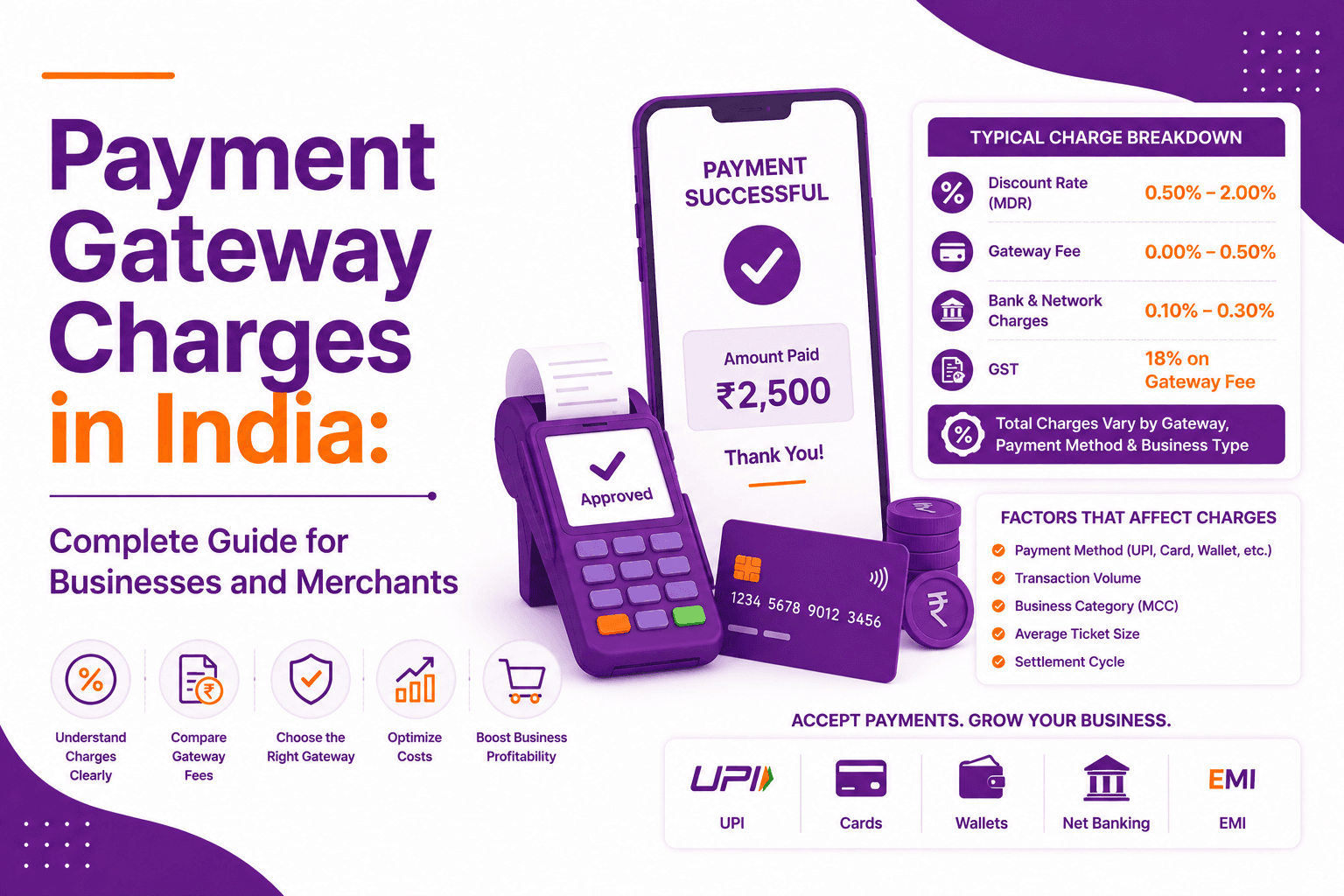
India’s digital commerce ecosystem is growing at an unprecedented pace, making it essential for businesses to understand payment gateway charges in India before selecting a payment acceptance solution. Whether you’re an enterprise retailer, an e-commerce business, a mobile retailer, or a small merchant, payment processing costs directly affect profitability and customer experience.
With the rapid adoption of UPI, cards, wallets, and omnichannel commerce, merchants increasingly rely on robust payment gateways and digital payment infrastructure to manage transactions efficiently. However, understanding transaction fees, settlement charges, and merchant pricing structures can be challenging.
As India’s payment ecosystem continues to evolve under the guidance of the RBI, businesses are evaluating solutions that balance cost, reliability, and scalability. Companies such as Innoviti play a key role in enabling seamless digital payment acceptance across retail and enterprise environments.
Table of Contents
- What Are Payment Gateway Charges in India?
- How Payment Gateway Charges Work
- Components of Payment Gateway Pricing
- Typical Payment Gateway Charges in India
- UPI vs Card Payment Processing Costs
- Factors Affecting Payment Gateway Charges in India
- How Businesses Can Reduce Payment Gateway Costs
- Choosing the Right Payment Gateway Provider
- Payment Gateway Charges in India for Different Business Types
- The Role of Payment Infrastructure in Merchant Growth
- Industry Insights
- Featured Snippet Section
- FAQs
- Conclusion
What Are Payment Gateway Charges in India?
Payment gateway charges in India refer to the fees merchants pay to process digital transactions through a payment gateway platform. These charges cover authorization, routing, settlement, fraud prevention, security compliance, and payment processing services.
A payment gateway acts as the bridge between a customer, the merchant, acquiring banks, issuing banks, and payment networks.
Typical costs may include:
- Merchant Discount Rate (MDR)
- Setup fees
- Annual maintenance fees
- Platform subscription fees
- Transaction processing fees
- Settlement fees
- Refund processing charges
Understanding payment gateway charges in India helps businesses accurately estimate operating costs and optimize margins.
How Payment Gateway Charges Work
When a customer completes an online or offline purchase, multiple entities participate in processing the payment:
| Participant | Role |
| Customer Bank | Issues payment instrument |
| Payment Gateway | Processes transaction |
| Acquiring Bank | Receives merchant payments |
| Card Network | Facilitates communication |
| Merchant | Accepts payment |
The associated payment processing cost is typically distributed among these stakeholders.
Payment Flow
- Customer initiates payment.
- Gateway encrypts transaction data.
- Bank verifies payment.
- Authorization is approved.
- Settlement occurs.
- Merchant receives funds.
This process forms the foundation of India’s digital payments ecosystem.
Components of Payment Gateway Pricing
Understanding the structure behind payment gateway charges in India requires breaking down individual fee components.
1. Merchant Discount Rate (MDR)
The Merchant Discount Rate is the percentage charged on each transaction.
Example:
| Transaction Value | MDR | Fee |
| ₹1,000 | 1.5% | ₹15 |
| ₹5,000 | 1.5% | ₹75 |
| ₹10,000 | 1.5% | ₹150 |
MDR varies depending on:
- Industry category
- Payment method
- Risk profile
- Transaction volume
2. Setup Fees
Some providers charge a one-time onboarding fee.
This may include:
- Merchant account creation
- API integration
- Security configuration
- Compliance setup
3. Annual Maintenance Charges
Certain providers charge recurring maintenance fees for platform support and infrastructure access.
4. Transaction Processing Fees
These fees apply every time a payment is processed.
Common categories include:
- Credit card payment charges
- Debit card transaction fees
- Net banking fees
- Wallet processing fees
5. Refund and Chargeback Fees
Businesses may incur additional costs when:
- Processing refunds
- Handling disputes
- Managing chargebacks
Typical Payment Gateway Charges in India
The exact payment gateway charges in India vary among providers.
General Industry Ranges
| Payment Method | Typical Charges |
| Credit Cards | 1.5% – 3% |
| Debit Cards | 0.4% – 1% |
| Net Banking | Fixed or percentage-based |
| Wallets | 1% – 3% |
| International Cards | 3% – 5% |
| UPI | Depends on merchant category |
Merchants should evaluate the complete pricing structure rather than focusing only on headline transaction fees.
UPI vs Card Payment Processing Costs
As UPI becomes India’s preferred payment method, businesses often compare it with card-based payments.
| Factor | UPI | Cards |
| Customer Adoption | Very High | High |
| Transaction Speed | Instant | Fast |
| Infrastructure Cost | Lower | Higher |
| Hardware Dependency | Low | Moderate |
| Processing Complexity | Lower | Higher |
UPI Advantages
- Faster checkout
- Reduced friction
- High consumer adoption
- Real-time settlements
Card Payment Advantages
- Higher ticket sizes
- EMI options
- International acceptance
- Credit facilities
Businesses increasingly adopt both methods to support omnichannel payment experiences.
Factors Affecting Payment Gateway Charges in India
Several variables influence payment gateway charges in India.
Transaction Volume
Higher transaction volumes often enable merchants to negotiate lower fees.
Business Category
Different industries carry different risk profiles.
Examples:
- Retail
- Electronics
- Travel
- Subscription services
- Healthcare
Settlement Speed
Faster settlements may involve premium pricing.
Risk Management Requirements
Advanced fraud detection and compliance tools may increase costs.
International Transactions
Cross-border payments typically attract higher processing fees.
How Businesses Can Reduce Payment Gateway Costs
Reducing payment gateway charges in India requires strategic planning.
Negotiate Based on Volume
Enterprise retailers processing high transaction volumes can often secure better pricing.
Optimize Payment Mix
Encourage lower-cost payment methods where appropriate.
Reduce Chargebacks
Businesses can lower costs through:
- Better customer communication
- Fraud prevention tools
- Accurate order management
Evaluate Total Cost of Ownership
Consider:
- Integration costs
- Support costs
- Settlement speed
- Infrastructure capabilities
Rather than selecting solely on MDR.
Choosing the Right Payment Gateway Provider
When evaluating payment gateway providers in India, businesses should assess:
Reliability
Look for:
- High uptime
- Stable infrastructure
- Transaction success rates
Security
Ensure support for:
- PCI-DSS compliance
- Encryption
- Tokenization
Scalability
The solution should support future growth.
Omnichannel Support
Modern merchants increasingly require:
- Online payments
- In-store payments
- Mobile payments
- QR payments
Solutions such as UniPay and other integrated payment platforms demonstrate how merchants are moving toward unified payment acceptance.
Payment Gateway Charges in India for Different Business Types
Enterprise Retailers
Requirements:
- High transaction volumes
- Centralized reporting
- Multi-location management
Retail Chains
Focus areas:
- POS integration
- Omnichannel payments
- Faster settlements
Organizations can explore retail payment innovations through Genie and similar merchant-focused technologies.
E-commerce Businesses
Priorities include:
- Checkout optimization
- Fraud management
- Global acceptance
SMB Merchants
Need:
- Affordable pricing
- Easy onboarding
- Simple integration
The Role of Payment Infrastructure in Merchant Growth
Strong payment infrastructure directly impacts:
- Customer experience
- Transaction success rates
- Revenue realization
- Business scalability
Modern fintech ecosystems are increasingly focused on:
- Automated reconciliation
- Smart routing
- AI-driven fraud detection
- Embedded finance
- Unified commerce
Businesses that invest in robust payment processing systems are better positioned for long-term growth.
For additional payment ecosystem insights, merchants can explore the Innoviti Blog.
Industry Insights
The Future of Digital Payments in India
India’s payment ecosystem is entering a new phase of innovation.
UPI Growth
UPI continues to dominate transaction volumes due to its convenience, interoperability, and real-time capabilities.
RBI Regulations
The Reserve Bank of India (RBI) continues to strengthen payment security, consumer protection, and digital payment adoption.
Embedded Finance
Payment experiences are increasingly integrated directly into commerce journeys.
AI-Driven Payments
Artificial intelligence is improving:
- Fraud detection
- Risk management
- Customer personalization
- Transaction routing
Merchant Automation
Businesses are adopting automated reconciliation, analytics, and settlement management tools.
Payment Orchestration
Payment orchestration platforms enable merchants to optimize routing and maximize transaction success rates.
Omnichannel Commerce
Consumers expect seamless experiences across:
- Stores
- Websites
- Apps
- Marketplaces
The future belongs to merchants that can unify payment acceptance across every channel.
What Are Payment Gateway Charges in India?
Payment gateway charges in India are the fees businesses pay to process digital transactions through payment gateways. These charges may include Merchant Discount Rate (MDR), transaction processing fees, setup fees, settlement costs, and charges related to card, UPI, wallet, and net banking payments. The exact pricing depends on transaction volume, business category, payment methods, and service provider.
Conclusion
Understanding payment gateway charges in India is essential for businesses seeking to optimize costs while delivering seamless customer payment experiences. Beyond transaction fees, merchants must evaluate the broader payment ecosystem, including payment processing, merchant acquiring, security, scalability, and omnichannel capabilities.
As India’s digital payments landscape continues to evolve through UPI, AI-powered payment technologies, embedded finance, and enhanced RBI regulations, businesses will need payment solutions that support both growth and operational efficiency.
Whether you’re an enterprise retailer, retail chain, e-commerce business, or SMB merchant, selecting the right payment infrastructure can significantly impact profitability and customer satisfaction. As India’s payment ecosystem advances, organizations can learn more about industry developments and payment innovation through Innoviti, a key contributor to the country’s rapidly expanding digital commerce landscape.
FAQ Section
1. What are payment gateway charges in India?
Payment gateway charges in India are fees charged to merchants for processing online and digital payments. These charges typically include MDR, transaction processing fees, and service-related costs.
2. How much do payment gateway fees cost in India?
Payment gateway fees vary depending on the provider, payment method, and business category. Charges generally range from less than 1% to 3% or more per transaction.
3. Are there UPI payment gateway charges for merchants?
UPI payment gateway charges depend on merchant category, transaction type, and provider arrangements. Businesses should review pricing structures carefully before onboarding.
4. What is Merchant Discount Rate (MDR)?
Merchant Discount Rate (MDR) is the percentage deducted from a transaction amount to cover payment processing services provided by banks and payment providers.
5. How can businesses reduce payment gateway charges in India?
Businesses can negotiate better rates, improve transaction volumes, reduce chargebacks, and optimize their payment mix to lower payment gateway charges in India.
6. What should businesses consider besides transaction fees?
Merchants should evaluate uptime, security, settlement speed, integration capabilities, omnichannel support, and overall payment infrastructure quality in addition to pricing.