
Payment Gateway for Enterprise Retail: The Complete Guide for Modern Retail Businesses
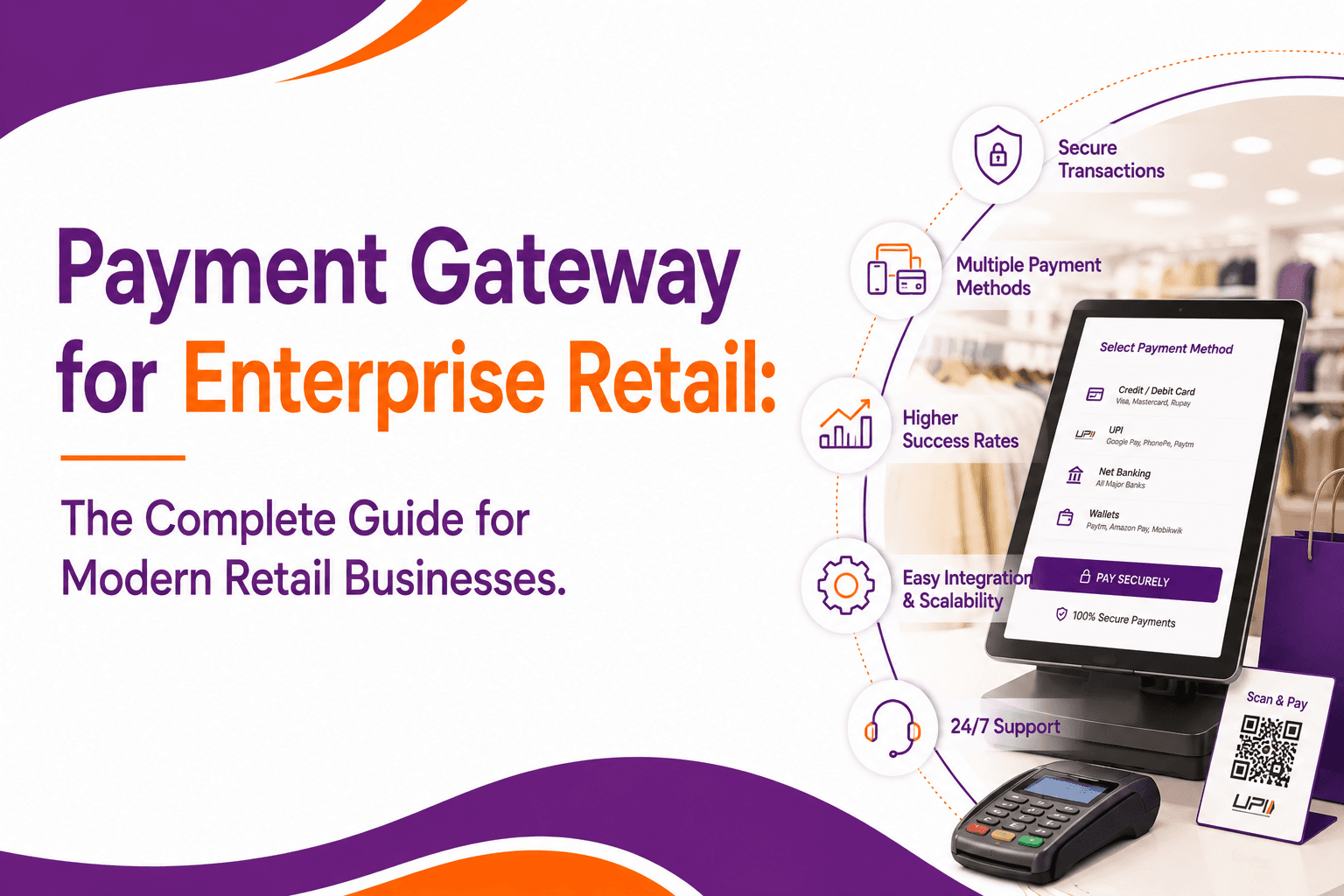
A payment gateway for enterprise retail is no longer just a transaction processing tool—it has become a strategic business asset. As large retail chains, multi-location stores, and enterprise merchants manage growing transaction volumes across physical and digital channels, payment infrastructure plays a critical role in ensuring smooth customer experiences and operational efficiency.
India’s digital payments ecosystem continues to expand rapidly, driven by UPI Payments, mobile commerce, omnichannel shopping, and increasing consumer expectations for seamless payment experiences. Enterprise retailers must support multiple payment methods while maintaining reliability, security, and scalability.
A modern payment gateway for enterprise retail helps businesses optimize transaction processing, improve payment success rates, support omnichannel commerce, and simplify payment operations. Innoviti continues contributing to India’s digital commerce transformation through advanced payment technologies built for enterprise-scale retail environments.
Table of Contents
- What Is a Payment Gateway for Enterprise Retail?
- Why Enterprise Retailers Need Specialized Payment Infrastructure
- How a Payment Gateway for Enterprise Retail Works
- Key Features of Enterprise Retail Payment Gateways
- Benefits of a Payment Gateway for Enterprise Retail
- Enterprise Retail vs Standard Payment Gateway Requirements
- Retail Use Cases and Applications
- Best Practices for Enterprise Retail Payment Management
- Future Trends in Enterprise Retail Payments
- Industry Insights
- Featured Snippet Section
- FAQ Section
- Conclusion
What Is a Payment Gateway for Enterprise Retail?
A payment gateway for enterprise retail is a payment processing platform designed to support the complex payment needs of large retailers, retail chains, multi-store businesses, and omnichannel merchants.
Unlike standard payment solutions, enterprise retail payment gateways must handle:
- High transaction volumes
- Multiple store locations
- Omnichannel commerce
- Diverse payment methods
- Real-time reporting
- Advanced payment optimization
A modern payment gateway for enterprise retail acts as the bridge between customers, merchants, banks, payment networks, and digital payment systems.
Why Enterprise Retailers Need Specialized Payment Infrastructure
Enterprise retailers operate in environments that require more than basic payment processing.
High Transaction Volumes
Large retailers process thousands of transactions daily.
Omnichannel Commerce
Customers expect consistent experiences across:
- Physical stores
- Mobile applications
- Ecommerce websites
- Social commerce platforms
Multiple Payment Methods
Consumers increasingly prefer diverse payment options.
Operational Complexity
Managing payments across multiple locations requires centralized visibility.
Business Scalability
Growing retailers need payment systems capable of supporting expansion.
These factors make a payment gateway for enterprise retail essential.
How a Payment Gateway for Enterprise Retail Works
Understanding how a payment gateway for enterprise retail operates helps businesses optimize payment strategies.
Step 1: Customer Initiates Payment
The customer selects products and proceeds to payment.
Step 2: Payment Information Is Captured
The gateway securely collects transaction data.
Step 3: Authorization Request
The transaction is transmitted for approval.
Step 4: Intelligent Processing
The payment infrastructure determines the most effective processing route.
Step 5: Approval and Confirmation
The transaction is approved and confirmation is provided.
Step 6: Settlement and Reporting
Funds are settled and transaction data becomes available for analysis.
This process highlights the importance of a robust payment gateway for enterprise retail.
Key Features of Enterprise Retail Payment Gateways
Omnichannel Payment Support
Customers can pay seamlessly across channels.
Multi-Store Management
Centralized visibility across multiple retail locations.
UPI and Card Acceptance
Support for modern consumer payment preferences.
Real-Time Reporting
Instant access to transaction insights.
Payment Routing Optimization
Improves transaction approval rates.
Enterprise Security
Advanced fraud prevention and compliance controls.
These features define an effective payment gateway for enterprise retail.
Benefits of a Payment Gateway for Enterprise Retail
Improved Customer Experience
Fast and reliable transactions reduce checkout friction.
Higher Transaction Success Rates
Optimized routing improves authorization performance.
Operational Efficiency
Automation reduces manual intervention.
Centralized Visibility
Businesses gain complete payment ecosystem oversight.
Scalability
The payment infrastructure grows alongside the business.
Revenue Protection
Reduced transaction failures help prevent lost sales.
These benefits make a payment gateway for enterprise retail a strategic investment.
Enterprise Retail vs Standard Payment Gateway Requirements
| Feature | Enterprise Retail | Standard Business |
| Transaction Volume | High | Moderate |
| Omnichannel Support | Essential | Optional |
| Multi-Store Management | Required | Limited |
| Reporting Depth | Advanced | Standard |
| Payment Optimization | High Priority | Moderate |
| Scalability | Critical | Moderate |
This comparison illustrates why enterprise retailers require specialized payment solutions.
Retail Use Cases and Applications
Retail Chains
Large retailers require centralized payment management across locations.
Department Stores
Complex transaction environments benefit from advanced payment infrastructure.
Consumer Electronics Retail
High-value purchases require reliable payment processing.
Fashion and Apparel Retail
Fast checkout experiences improve customer satisfaction.
Grocery and Supermarkets
High transaction volumes demand scalable payment solutions.
These use cases demonstrate the value of a payment gateway for enterprise retail.
Best Practices for Enterprise Retail Payment Management
Enable Multiple Payment Methods
Support customer preferences across demographics.
Monitor Transaction Performance
Analyze approval rates and payment trends regularly.
Invest in Payment Security
Protect customer information and reduce fraud risks.
Optimize Checkout Experiences
Minimize friction throughout the payment journey.
Leverage Analytics
Use transaction insights to improve operations.
Prepare for Growth
Choose scalable payment infrastructure.
These practices maximize the effectiveness of a payment gateway for enterprise retail.
Future Trends in Enterprise Retail Payments
AI-Powered Payment Optimization
Artificial intelligence will improve transaction routing and approvals.
Embedded Finance
Financial services will become integrated into retail experiences.
Payment Orchestration
Retailers will increasingly manage multiple providers through centralized platforms.
Contactless Commerce
Digital-first payment experiences will continue expanding.
Unified Commerce
Online and offline payment ecosystems will become increasingly connected.
These trends will shape the future of the payment gateway for the enterprise retail landscape.
The Future of Digital Payments in India
India continues leading innovation in digital commerce and payment technologies.
UPI Growth
UPI Payments continue transforming how consumers and businesses transact.
RBI Regulations
The RBI continues strengthening payment security, innovation, and financial inclusion.
Embedded Finance
Financial services are becoming embedded within retail ecosystems.
AI-Driven Payments
Artificial intelligence enhances:
- Fraud prevention
- Payment optimization
- Customer experiences
Merchant Automation
Businesses are automating:
- Reconciliation
- Reporting
- Payment management
Payment Orchestration
Payment Orchestration is becoming a critical component of enterprise payment ecosystems.
Omnichannel Commerce
Consumers increasingly expect seamless payment experiences across every touchpoint.
What Is a Payment Gateway for Enterprise Retail?
A payment gateway for enterprise retail is a payment processing platform designed to support large retailers, retail chains, and multi-location businesses. It enables secure transaction processing, omnichannel payment acceptance, centralized reporting, and scalable payment infrastructure while improving customer experiences and operational efficiency.
Conclusion
A payment gateway for enterprise retail has become a critical component of modern retail success. As businesses operate across physical stores, ecommerce platforms, mobile channels, and emerging commerce ecosystems, payment infrastructure plays an increasingly strategic role in customer experience and business performance.
Enterprise retailers require more than simple transaction processing. They need scalable systems capable of supporting omnichannel commerce, high transaction volumes, advanced reporting, and intelligent payment optimization. A robust payment gateway helps businesses improve operational efficiency, protect revenue, and create seamless customer journeys.
As technologies such as AI-driven payments, Payment Orchestration, embedded finance, and real-time payment processing continue evolving, enterprise retailers will gain even greater opportunities to optimize payment operations. Innoviti remains committed to supporting India’s retail ecosystem through advanced Payment Infrastructure, Merchant Acquiring, Payment Processing, and digital payment innovations designed for the future of enterprise commerce.
FAQ Section
1. What is a payment gateway for enterprise retail?
A payment gateway for enterprise retail is a payment solution built to support high transaction volumes, multiple store locations, omnichannel commerce, and advanced payment management requirements.
2. Why do enterprise retailers need specialized payment gateways?
Enterprise retailers require scalable infrastructure, centralized reporting, omnichannel support, and advanced transaction optimization capabilities.
3. Does a payment gateway for enterprise retail support UPI payments?
Yes. Most modern enterprise payment gateways support UPI Payments, cards, wallets, net banking, and other digital payment methods.
4. How does a payment gateway improve customer experience?
It enables faster transactions, supports preferred payment methods, reduces payment failures, and creates smoother checkout journeys.
5. What is omnichannel payment acceptance?
Omnichannel payment acceptance allows customers to enjoy consistent payment experiences across physical stores, websites, mobile applications, and other channels.
6. How does payment orchestration benefit enterprise retailers?
Payment Orchestration improves transaction routing, enhances authorization rates, and helps retailers manage multiple payment providers efficiently.