
Payment Orchestration: The Future of Smarter Payment Management in India
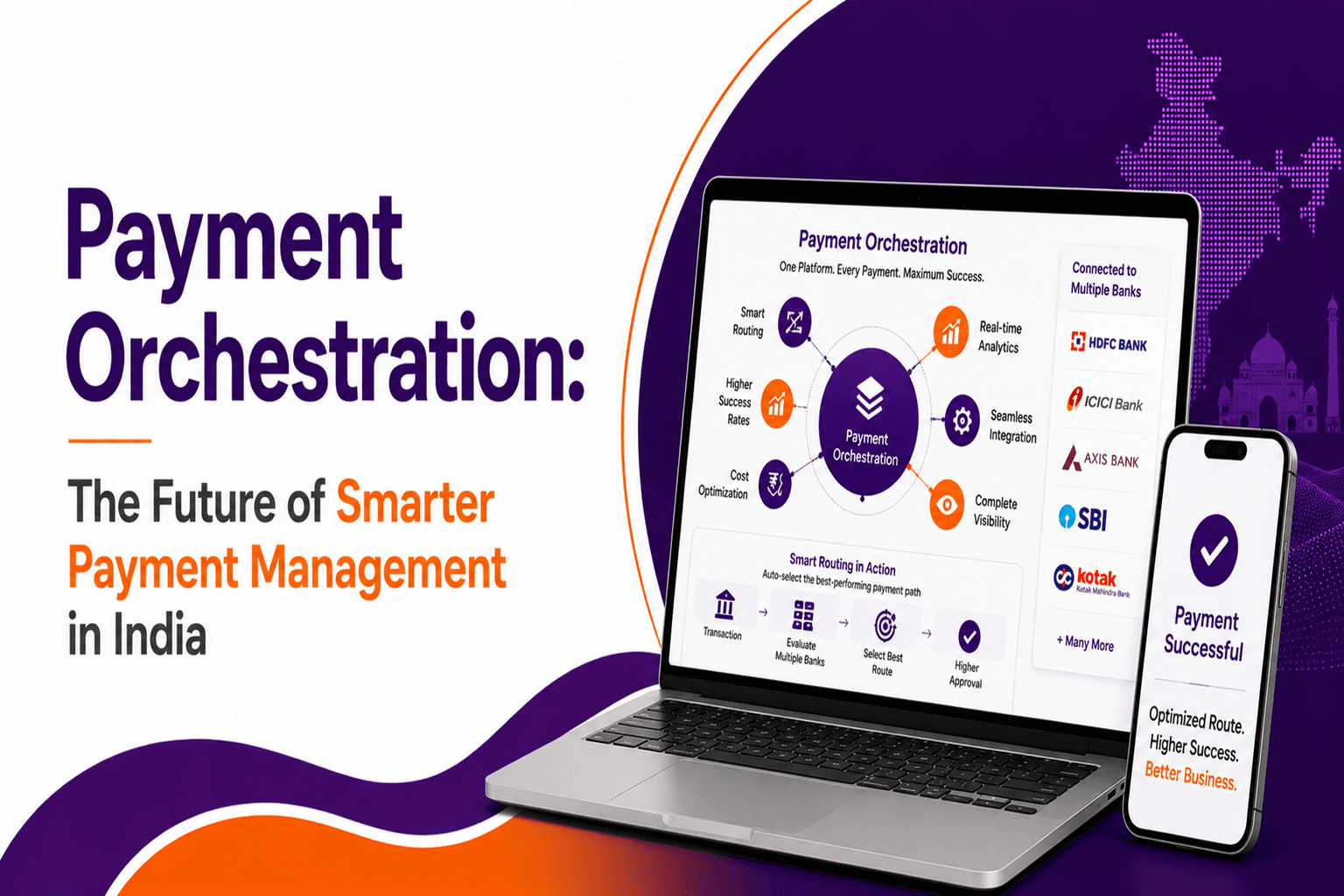
Payment orchestration is rapidly becoming a critical component of modern digital commerce. As businesses manage growing volumes of Online Payments, UPI Payments, card transactions, and omnichannel payment experiences, traditional payment infrastructures often struggle to deliver the flexibility and reliability merchants require.
India’s digital payments ecosystem has witnessed unprecedented growth, creating a need for more intelligent payment management systems. Businesses today must optimize transaction routing, improve authorization rates, reduce payment failures, and manage multiple payment providers efficiently.
This is where payment orchestration plays a transformative role. By creating a centralized layer that manages payment gateways, acquiring banks, payment methods, and transaction routing, payment orchestration helps businesses streamline operations while improving customer experiences. Innoviti continues contributing to India’s evolving payment ecosystem through advanced payment infrastructure and merchant-focused payment innovations.
Table of Contents
- What Is Payment Orchestration?
- Why Payment Orchestration Matters
- How Payment Orchestration Works
- Key Benefits of Payment Orchestration
- Payment Orchestration vs Traditional Payment Systems
- Core Components of a Payment Orchestration Platform
- Industry Use Cases
- Best Practices for Implementation
- The Future of Payment Orchestration
- Industry Insights
- Featured Snippet Section
- FAQ Section
- Conclusion
What Is Payment Orchestration?
Payment orchestration is a centralized technology layer that manages and coordinates multiple payment providers, payment gateways, acquiring banks, and payment methods through a unified platform.
Rather than relying on a single provider, businesses use payment orchestration to intelligently manage the entire payment lifecycle.
A modern payment orchestration system can:
- Route transactions dynamically
- Connect multiple payment gateways
- Support various payment methods
- Optimize authorization rates
- Simplify payment operations
- Improve customer payment experiences
As digital commerce becomes more complex, payment orchestration is becoming essential for enterprise payment management.
Why Payment Orchestration Matters
The payment ecosystem has evolved significantly.
Businesses today often manage:
- Multiple payment gateways
- Several acquiring banks
- UPI payment channels
- Card payment networks
- Mobile wallets
- Omnichannel payment systems
Without payment orchestration, managing these systems can become operationally challenging.
Key Challenges Solved by Payment Orchestration
- Payment failures
- Gateway downtime
- Complex integrations
- Fragmented reporting
- Settlement inefficiencies
- Customer checkout friction
Payment orchestration helps overcome these challenges through centralized control and intelligent automation.
How Payment Orchestration Works
Understanding how payment orchestration works is important for businesses evaluating modern payment infrastructures.
Step 1: Customer Initiates Payment
A customer chooses a payment method during checkout.
Step 2: Payment Request Enters Orchestration Layer
The orchestration platform receives the transaction request.
Step 3: Intelligent Routing
The system evaluates:
- Gateway performance
- Acquirer availability
- Transaction type
- Historical approval rates
Step 4: Transaction Processing
The platform routes the transaction to the optimal provider.
Step 5: Authorization and Settlement
The selected provider processes the transaction.
Step 6: Reporting and Analytics
Businesses gain centralized visibility into payment performance.
This process demonstrates the efficiency advantages of payment orchestration.
Key Benefits of Payment Orchestration
Improved Transaction Success Rates
Smart routing increases the likelihood of payment approval.
Reduced Downtime Risk
Multiple providers reduce dependency on a single payment channel.
Better Customer Experience
Customers encounter fewer payment failures.
Faster Market Expansion
Businesses can add payment methods more efficiently.
Centralized Payment Management
Operations teams gain unified control across providers.
Enhanced Reporting
Centralized analytics improve business visibility.
These benefits make payment orchestration increasingly valuable for merchants.
Payment Orchestration vs Traditional Payment Systems
| Feature | Payment Orchestration | Traditional Setup |
| Gateway Management | Multiple | Limited |
| Routing Intelligence | Advanced | Basic |
| Provider Flexibility | High | Low |
| Analytics | Centralized | Fragmented |
| Scalability | Excellent | Moderate |
| Customer Experience | Optimized | Standard |
This comparison highlights why payment orchestration is becoming a preferred enterprise solution.
Core Components of a Payment Orchestration Platform
Payment Gateway Management
The platform connects multiple Payment Gateway providers.
Multi Bank Acquiring
Businesses gain access to several acquiring banks simultaneously.
Smart Payment Routing
Transactions are routed based on performance and business rules.
Fraud Management
Risk assessment tools improve transaction security.
Unified Reporting
Centralized dashboards provide operational visibility.
Payment Method Integration
Support for:
- UPI
- Cards
- Wallets
- Net banking
- Emerging payment methods
These components make payment orchestration a comprehensive payment management solution.
Industry Use Cases
Enterprise Retail
Large retailers process transactions across multiple channels.
E-Commerce
Online businesses optimize checkout performance and conversion rates.
Travel and Hospitality
Travel companies manage complex payment workflows and international transactions.
Healthcare
Healthcare providers require reliable payment processing systems.
Financial Services
Fintech organizations use orchestration to manage diverse payment ecosystems.
These sectors benefit significantly from payment orchestration capabilities.
Best Practices for Implementing Payment Orchestration
Define Business Objectives
Understand desired outcomes before implementation.
Prioritize Scalability
Choose infrastructure capable of supporting future growth.
Focus on Analytics
Monitor authorization rates and payment performance continuously.
Optimize Routing Rules
Use performance data to improve transaction outcomes.
Ensure Compliance
Maintain regulatory and security requirements.
Enable Omnichannel Support
Create consistent experiences across online and offline channels.
Following these practices maximizes the value of payment orchestration.
The Future of Payment Orchestration
The future of payment orchestration is closely connected to digital commerce innovation.
AI-Powered Routing
Artificial intelligence will optimize transaction routing in real time.
Embedded Finance
Financial services will become increasingly integrated into commerce experiences.
Hyper-Personalized Payments
Payment experiences will adapt dynamically to customer preferences.
Real-Time Decision Engines
Faster routing and approval optimization will improve customer outcomes.
Global Payment Connectivity
Businesses will manage domestic and international payment ecosystems from a single platform.
These developments will further accelerate adoption of payment orchestration.
The Future of Digital Payments in India
India remains one of the fastest-growing digital payment markets globally.
UPI Growth
UPI Payments continue driving digital payment adoption across consumers and businesses.
RBI Regulations
The RBI continues strengthening payment security, compliance, and innovation frameworks.
Embedded Finance
Financial products are increasingly becoming integrated into customer journeys.
AI-Driven Payments
Artificial intelligence is improving:
- Fraud prevention
- Routing decisions
- Authorization rates
Merchant Automation
Businesses are automating:
- Reconciliation
- Reporting
- Settlement management
Payment Orchestration
Payment orchestration is emerging as a foundational layer for enterprise payment ecosystems.
Omnichannel Commerce
Consumers increasingly expect seamless payment experiences across every channel.
What Is Payment Orchestration?
Payment orchestration is a centralized platform that manages payment gateways, acquiring banks, payment methods, and transaction routing through a single interface. It helps businesses improve payment success rates, optimize payment processing, reduce operational complexity, and enhance customer payment experiences.
Conclusion
Payment orchestration is redefining how businesses manage digital payments in an increasingly complex commerce environment. By centralizing payment operations, optimizing transaction routing, and supporting multiple payment providers, businesses can improve customer experiences while enhancing operational efficiency.
As transaction volumes continue growing across UPI Payments, card networks, digital wallets, and omnichannel commerce, merchants require flexible and scalable payment infrastructures. Payment orchestration provides the visibility, intelligence, and automation necessary to support these evolving demands.
Looking ahead, innovations in artificial intelligence, embedded finance, real-time analytics, and Payment Processing will further strengthen the role of payment orchestration within modern commerce ecosystems. Innoviti continues supporting India’s digital transformation journey through advanced payment technologies, robust Payment Infrastructure, and merchant-focused innovations that help businesses thrive in the future of digital payments.
FAQ Section
1. What is payment orchestration?
Payment orchestration is a technology layer that enables businesses to manage multiple payment providers, gateways, acquirers, and payment methods through a unified platform.
2. Why is payment orchestration important?
It helps businesses improve transaction success rates, reduce downtime risks, simplify integrations, and optimize payment operations.
3. How does payment orchestration improve payment success rates?
The platform intelligently routes transactions through the most effective provider based on performance, availability, and business rules.
4. Which businesses benefit from payment orchestration?
Enterprise retailers, e-commerce businesses, travel companies, healthcare providers, and fintech organizations benefit significantly.
5. Does payment orchestration support UPI and card payments?
Yes. Modern orchestration platforms support UPI Payments, cards, wallets, net banking, and various digital payment methods.
6. What is the difference between payment orchestration and a payment gateway?
A Payment Gateway processes transactions, while payment orchestration manages multiple gateways, acquirers, and payment providers through a centralized layer.