
Payment Settlement Process India Retail: A Complete Guide for Merchants
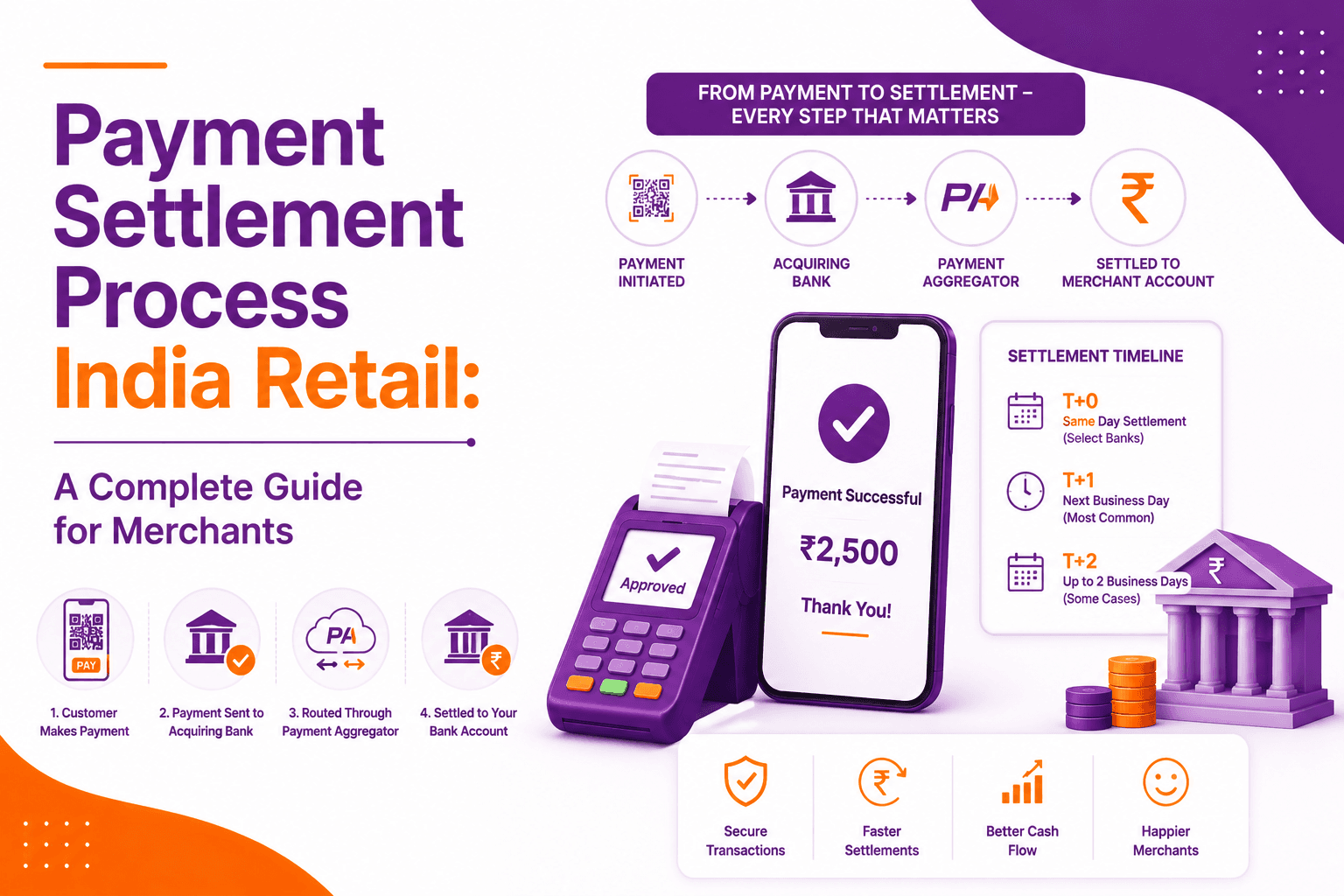
The payment settlement process India retail ecosystem has become increasingly important as India’s digital economy continues expanding. Every day, millions of digital payments, card transactions, and UPI transactions occur across retail stores, supermarkets, mobile outlets, and enterprise chains. While customers often focus on completing purchases, merchants are equally concerned about when and how funds reach their accounts.
Understanding the payment settlement process is essential for managing cash flow, improving operational efficiency, and ensuring business continuity. Delays, reconciliation issues, or settlement errors can directly impact retail operations and profitability.
Modern fintech providers such as Innoviti are helping merchants streamline merchant payment settlement, improve visibility into settlement timelines, and optimize the overall payment experience. For businesses accepting digital payments, understanding settlement workflows is now a critical part of financial management.
Table of Contents
- What Is the Payment Settlement Process in Indian Retail?
- Why Payment Settlement Matters for Retail Businesses
- Key Components of the Payment Settlement Process
- How the Payment Settlement Process Works
- Settlement Cycles and Timelines in India
- Payment Reconciliation and Reporting
- Common Challenges in Retail Payment Settlements
- How Innoviti Simplifies Payment Settlement
- The Future of Digital Payments in India
- Quick Answer: Payment Settlement Process India Retail
- FAQs
- Conclusion
What Is the Payment Settlement Process in Indian Retail?
The payment settlement process in India retail refers to the movement of funds from a customer’s payment source to the merchant’s bank account after a transaction is completed.
This process applies to:
- Credit card transactions
- Debit card transactions
- UPI transactions
- Wallet payments
- Net banking payments
- Contactless payments
Simple Definition
The merchant settlement process begins when a customer makes a payment and ends when the merchant receives funds in their account.
Why Settlement Matters
Settlement ensures:
- Merchant payments are completed
- Transaction records are maintained
- Financial reconciliation becomes easier
- Businesses receive accurate payouts
Without efficient settlement systems, retailers may face cash flow disruptions and operational challenges.
Why Payment Settlement Matters for Retail Businesses
The importance of the payment settlement process goes beyond simply transferring money.
Cash Flow Management
Retail businesses depend on timely settlements to:
- Pay suppliers
- Manage inventory
- Meet payroll obligations
- Fund daily operations
Financial Accuracy
Accurate payment reconciliation process workflows help merchants verify that every transaction has been properly processed and settled.
Customer Trust
Reliable settlement systems improve payment reliability and strengthen customer confidence in digital transactions.
Business Scalability
As transaction volumes increase, businesses require scalable payment settlement solutions that can handle growing operational demands.
Key Components of the Payment Settlement Process
Understanding the different participants involved in retail payment settlement helps merchants better understand how funds move through the ecosystem.
Customer
The customer initiates the transaction.
Merchant
The merchant accepts the payment using:
- POS systems
- Payment gateways
- UPI QR codes
- Mobile payment devices
Acquiring Bank
The acquiring bank processes payments on behalf of the merchant.
Issuing Bank
The issuing bank validates and approves the customer’s payment.
Payment Network
Card networks and UPI infrastructure facilitate transaction routing.
Settlement Platform
The settlement platform coordinates fund movement and settlement execution.
Settlement Flow Overview
| Participant | Role |
| Customer | Initiates payment |
| Merchant | Accepts payment |
| Acquiring Bank | Processes merchant payments |
| Issuing Bank | Authorizes payment |
| Payment Network | Routes transaction |
| Settlement System | Transfers funds |
How the Payment Settlement Process Works
The payment settlement process India retail explained becomes easier to understand when broken into stages.
Step 1: Transaction Initiation
The customer makes a payment through:
- Card
- UPI
- Wallet
- Net banking
Step 2: Authorization
The issuing bank verifies:
- Available funds
- Account validity
- Fraud checks
Step 3: Transaction Processing
The payment processing ecosystem routes the transaction through the appropriate payment network.
Step 4: Clearing
Transaction information is exchanged between financial institutions.
Step 5: Settlement
Funds are transferred to the merchant according to the applicable settlement cycle for retailers.
Step 6: Merchant Credit
The merchant receives funds in the designated account.
This entire process often occurs within predefined settlement windows established by providers and banking partners.
Settlement Cycles and Timelines in India
One of the most common merchant questions is:
How do merchants receive payments after transactions?
The answer depends on settlement schedules.
Typical Settlement Timelines
| Payment Method | Typical Settlement Time |
| UPI | T+0 to T+1 |
| Debit Card | T+1 to T+2 |
| Credit Card | T+1 to T+3 |
| Wallets | Varies by provider |
T = Transaction Date
Factors Affecting Settlement
Settlement timing may vary because of:
- Banking holidays
- Provider policies
- Transaction type
- Compliance reviews
Understanding retail payment settlement timeline in India helps businesses plan cash flow more effectively.
Payment Reconciliation and Reporting
A critical component of the payment settlement system in India is reconciliation.
What Is Reconciliation?
The payment reconciliation process involves matching:
- Transaction records
- Settlement records
- Bank credits
- Merchant reports
Benefits of Reconciliation
Proper reconciliation helps businesses:
- Detect discrepancies
- Improve financial accuracy
- Reduce revenue leakage
- Simplify audits
Key Metrics to Monitor
Merchants should track:
- Settlement amounts
- Pending settlements
- Failed transactions
- Refunds
- Chargebacks
Strong reconciliation capabilities are essential for high-volume retailers.
Common Challenges in Retail Payment Settlements
Despite advances in financial technology, merchants still face settlement-related challenges.
Settlement Delays
Delays can occur due to:
- Banking disruptions
- Compliance checks
- Technical issues
Reconciliation Errors
Manual reconciliation processes increase the risk of:
- Missing transactions
- Incorrect reporting
- Financial discrepancies
Multiple Payment Providers
Managing settlements across several payment providers creates complexity.
Limited Visibility
Many merchants struggle to track:
- Settlement status
- Transaction history
- Payment performance
Cash Flow Uncertainty
Delayed settlements can affect operational planning and inventory management.
How Innoviti Simplifies Payment Settlement
Innoviti has built payment infrastructure designed to simplify merchant payment settlement for businesses across India.
Centralized Settlement Management
Merchants gain visibility into:
- Settlement status
- Payment performance
- Transaction reports
Faster Payment Processing
Innoviti’s ecosystem helps streamline retail payment processing and improve operational efficiency.
Enhanced Reconciliation
Businesses benefit from:
- Better transaction tracking
- Improved reporting
- Reduced reconciliation effort
Omnichannel Payment Support
Innoviti supports payment acceptance across:
- Physical stores
- Mobile commerce
- Digital channels
This creates a more unified settlement experience for merchants.
Scalable Payment Infrastructure
Innoviti’s focus on payment infrastructure helps retailers manage growing transaction volumes efficiently.
Industry Insights
The Future of Digital Payments in India
India’s digital payment ecosystem continues evolving rapidly.
UPI Growth
The continued expansion of UPI transactions is increasing transaction volumes across all retail sectors.
RBI Regulations
The RBI continues strengthening payment governance and settlement transparency.
Embedded Finance
Financial services are becoming integrated directly into commerce experiences.
AI-Driven Payments
Artificial intelligence is improving:
- Fraud detection
- Settlement forecasting
- Transaction monitoring
- Risk management
Merchant Automation
Businesses increasingly automate:
- Reconciliation
- Settlement reporting
- Financial workflows
Payment Orchestration
Modern payment orchestration solutions optimize transaction routing and settlement efficiency.
Omnichannel Commerce
Future retail environments will require seamless settlement experiences across online and offline channels.
Payment Settlement Process India Retail
The payment settlement process in India retail refers to the transfer of funds from a customer’s payment method to a merchant’s bank account after transaction authorization, clearing, and settlement. The process involves banks, payment networks, acquiring institutions, and settlement systems working together to complete merchant payouts.
Key Stages
- Payment initiation
- Authorization
- Transaction processing
- Clearing
- Settlement
- Merchant account credit
Conclusion
Understanding the payment settlement process India retail is essential for merchants seeking to improve cash flow visibility, operational efficiency, and financial accuracy. As transaction volumes continue growing across digital payments, UPI transactions, and omnichannel commerce, efficient settlement systems have become a strategic business requirement.
By implementing strong payment settlement solutions, improving reconciliation processes, and leveraging modern payment infrastructure, retailers can reduce operational complexity and gain greater control over financial workflows. Accurate and timely settlements support business growth, improve decision-making, and strengthen merchant confidence.
Innoviti continues to help businesses optimize retail payment processing, simplify merchant payment settlement, and build scalable payment ecosystems that support the future of digital commerce in India.
FAQ Section
1. What is the payment settlement process India retail?
The payment settlement process India retail is the workflow through which funds from customer transactions are transferred to merchant bank accounts after authorization and processing.
2. How long does retail payment settlement take in India?
Settlement timelines vary depending on the payment method. UPI transactions are often settled faster, while card payments may follow T+1 or T+2 schedules.
3. What is a merchant settlement process?
The merchant settlement process includes transaction authorization, processing, clearing, and the final transfer of funds to the merchant account.
4. Why is payment reconciliation important?
The payment reconciliation process helps businesses verify that transaction records match settlement records and bank credits.
5. What factors affect settlement timelines?
Settlement timing can be influenced by banking holidays, transaction types, provider policies, compliance reviews, and payment network processes.
6. What are the best payment settlement solutions for retailers?
The best payment settlement solutions for retailers provide real-time visibility, automated reconciliation, faster payouts, and scalable payment infrastructure.