
POS Machine Rental Cost in India: A Complete Guide for Businesses
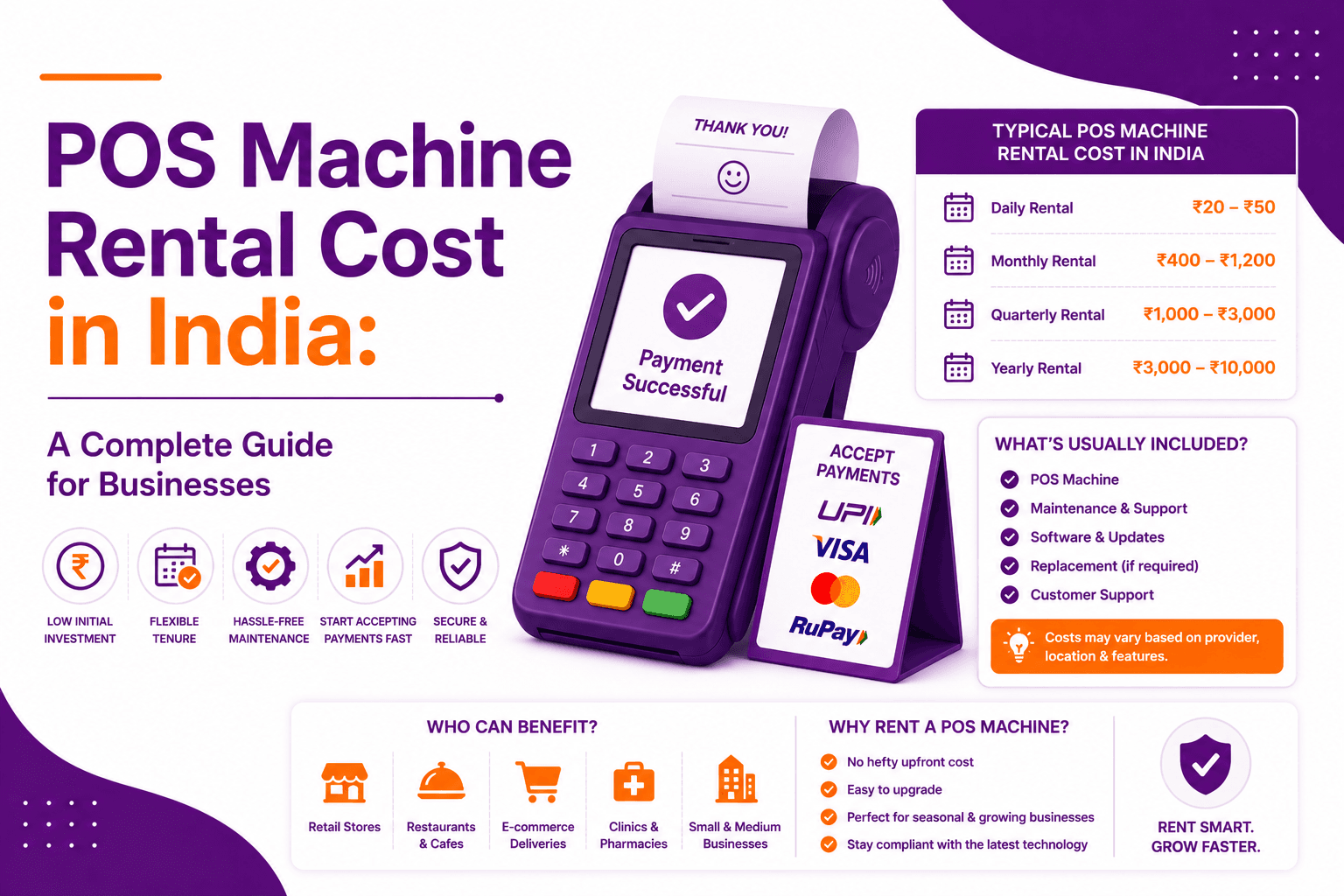
Understanding POS machine rental cost is essential for businesses that want to accept digital payments without making a large upfront investment in payment hardware. As India continues to witness rapid growth in UPI Payments, card transactions, and omnichannel commerce, renting a POS machine has become an attractive option for retailers, restaurants, pharmacies, mobile stores, and enterprise businesses.
Unlike purchasing a device outright, POS rentals allow merchants to access modern payment technology while maintaining financial flexibility. However, evaluating POS machine rental cost requires understanding rental plans, monthly fees, transaction charges, maintenance costs, and support services.
As businesses modernize their payment acceptance infrastructure, providers such as Innoviti contribute to the digital payments ecosystem by enabling merchants to access scalable payment solutions designed for evolving business needs.
Table of Contents
- What Is POS Machine Rental?
- POS Machine Rental Cost Explained
- Factors Affecting POS Machine Rental Cost
- Types of POS Machines Available for Rent
- POS Machine Rental Cost Comparison
- Benefits of Renting a POS Machine
- How to Choose the Right POS Rental Plan
- POS Machine Rental Cost for Different Businesses
- POS Rental vs POS Purchase
- Future of POS Technology in India
- Industry Insights
- Featured Snippet
- FAQs
- Conclusion
What Is POS Machine Rental?
POS machine rental refers to a business arrangement where merchants pay recurring charges to use a POS device instead of purchasing one outright.
The rental model allows businesses to:
- Accept card payments
- Process UPI Payments
- Support contactless transactions
- Access software updates
- Receive technical support
For many merchants, POS machine rental cost is easier to manage than a large one-time investment.
POS Machine Rental Cost Explained
The term POS machine rental cost includes all expenses associated with leasing a payment terminal.
These costs may include:
- Monthly rental fees
- Installation charges
- Maintenance fees
- SIM connectivity charges
- Device replacement costs
- Payment processing fees
A lower rental amount may not always provide the best value. Businesses should evaluate total ownership costs.
Components of POS Machine Rental Cost
| Cost Component | Description |
| Monthly Rental | Recurring device usage fee |
| Installation Charges | Setup and activation costs |
| Maintenance Cost | Device servicing and support |
| Connectivity Fees | SIM or network charges |
| Transaction Fees | Payment processing charges |
Understanding each component helps merchants accurately assess POS machine rental cost.
Factors Affecting POS Machine Rental Cost
Several variables influence POS machine rental cost in India.
Device Type
Advanced devices generally command higher rental charges.
Examples include:
- Basic swipe machines
- Wireless POS devices
- Android POS terminals
- Smart POS systems
Connectivity Features
Machines supporting:
- Wi-Fi
- 4G
- Bluetooth
- Multi-network support
often have higher rental costs.
Payment Acceptance Options
Devices supporting:
- Cards
- QR payments
- UPI Payments
- Contactless transactions
may offer greater business value.
Business Volume
High-volume merchants may negotiate lower POS machine rental costs through customized rental agreements.
Support Services
Premium support and faster replacement services may increase rental fees.
Types of POS Machines Available for Rent
Traditional Card Swipe Machines
These machines primarily process debit and credit card transactions.
Advantages:
- Lower rental costs
- Easy operation
- Suitable for small businesses
Wireless POS Machines
Wireless terminals provide greater mobility and convenience.
Benefits include:
- Flexible payment acceptance
- Queue reduction
- Better customer experience
The wireless POS machine rental segment is increasingly popular among retailers.
Android POS Machines
Android-based devices combine payment processing with business management tools.
Features include:
- Touchscreen displays
- Reporting dashboards
- App integrations
- Inventory management
Many merchants compare Android POS machine rental plans when modernizing their operations.
Smart POS Systems
Smart POS devices combine payment acceptance, analytics, customer engagement, and inventory management.
These systems are increasingly used by enterprise retailers.
POS Machine Rental Cost Comparison
| Device Type | Typical Rental Category |
| Basic POS Machine | Entry-level |
| Wireless POS Machine | Mid-range |
| Android POS Terminal | Moderate to Premium |
| Smart POS Device | Premium |
| Enterprise POS Solution | Custom Pricing |
The actual POS machine rental cost varies depending on provider, location, features, and support requirements.
Benefits of Renting a POS Machine
Many businesses prefer rentals due to operational flexibility.
Lower Upfront Investment
Renting eliminates the need for a significant hardware purchase.
Access to New Technology
Businesses can upgrade devices more easily as technology evolves.
Predictable Expenses
Fixed monthly rental charges help businesses manage budgets.
Reduced Maintenance Burden
Rental providers often handle:
- Repairs
- Replacements
- Software updates
This can reduce operational complexity.
Scalability
Businesses can expand device deployments without major capital expenditures.
How to Choose the Right POS Rental Plan
Selecting the right rental plan requires evaluating more than just POS machine rental cost.
Assess Business Needs
Consider:
- Transaction volume
- Payment methods accepted
- Customer traffic
Review Device Features
Look for support for:
- UPI Payments
- Contactless payments
- QR codes
- Mobile wallets
Evaluate Payment Infrastructure
Ensure the solution integrates with:
- Payment Gateway systems
- Billing software
- Inventory platforms
Compare Support Services
Support quality can significantly affect operational continuity.
POS Machine Rental Cost for Different Businesses
Retail Stores
Need:
- Fast billing
- Multiple payment options
- Reliable connectivity
Restaurants
Require:
- Table-side payments
- Mobile POS capabilities
- Fast settlement cycles
Mobile Retailers
Need:
- EMI processing
- Flexible payment acceptance
- Customer financing support
Enterprise Retail Chains
Require:
- Centralized reporting
- Omnichannel commerce
- Large-scale deployment
Organizations exploring enterprise-grade payment solutions should evaluate modern payment acceptance frameworks that support scalability and efficiency.
POS Rental vs POS Purchase
Businesses often compare renting with purchasing.
| Factor | Rental | Purchase |
| Initial Cost | Lower | Higher |
| Flexibility | High | Moderate |
| Maintenance | Usually Included | Merchant Responsibility |
| Upgrades | Easier | Additional Investment |
| Scalability | High | Variable |
For growing businesses, renting may offer greater flexibility while reducing capital expenditure.
Future of POS Technology in India
The future of POS technology is being shaped by:
- AI-powered analytics
- Cloud-based management
- Omnichannel commerce
- Embedded finance
- Advanced payment orchestration
Merchants increasingly require integrated retail technology rather than standalone payment terminals.
Businesses can also stay informed through industry resources, payment technology reports, and fintech research publications.
The Future of Digital Payments in India
India’s payment ecosystem continues to evolve rapidly.
UPI Growth
UPI Payments continue to dominate transaction volumes across merchant categories.
RBI Regulations
The RBI is strengthening security, compliance, and consumer protection standards.
Embedded Finance
Financial services are becoming integrated into commerce journeys.
AI-Driven Payments
Artificial intelligence is helping improve:
- Fraud prevention
- Customer experience
- Payment routing
Merchant Automation
Businesses increasingly rely on automation for:
- Reconciliation
- Reporting
- Settlement management
Payment Orchestration
Modern merchants use payment orchestration to improve transaction success rates.
Omnichannel Commerce
Consumers expect seamless payment experiences across physical stores, mobile apps, websites, and marketplaces.
What Is POS Machine Rental Cost?
POS machine rental cost refers to the recurring fee businesses pay to lease a POS terminal instead of purchasing one outright. The cost may include device rental, maintenance, connectivity services, technical support, and payment processing-related charges depending on the provider and plan selected.
Conclusion
Understanding POS machine rental cost is essential for businesses seeking a cost-effective and scalable way to accept digital payments. While rental pricing is an important consideration, merchants should also evaluate device capabilities, support services, payment acceptance options, and integration requirements before selecting a solution.
As India’s digital commerce ecosystem continues to expand through UPI Payments, omnichannel retailing, embedded finance, and AI-powered payment technologies, flexible POS rental models are becoming increasingly attractive for businesses of all sizes.
By choosing the right POS rental solution, merchants can improve operational efficiency, enhance customer experiences, and strengthen their participation in the evolving digital payments landscape. Innoviti continues to play an important role in supporting merchants with payment innovation and modern digital payment solutions.
FAQ Section
1. What is the POS machine rental cost?
POS machine rental cost is the recurring amount paid by a business to lease a POS device for accepting digital payments. It may include monthly rental fees, maintenance, connectivity, and support services.
2. How much is the monthly POS machine rental cost in India?
The monthly POS machine rental cost depends on the device type, features, provider, and support package selected. Advanced devices generally command higher rental fees.
3. Is renting a POS machine better than buying one?
Renting can be beneficial for businesses seeking flexibility, lower upfront costs, and easier access to technology upgrades.
4. Do rented POS machines support UPI payments?
Most modern rented POS devices support UPI Payments, QR codes, contactless transactions, and card payments.
5. What factors affect POS machine rental cost?
Device type, connectivity options, payment acceptance capabilities, transaction volume, and support services all influence rental pricing.
6. What should merchants evaluate besides rental charges?
Businesses should assess reliability, security, scalability, reporting capabilities, and integration with broader Payment Infrastructure and Payment Processing systems.